In the annals of sad white Midwestern guys with guitars, American Football stands tall. The iconic emo rock group (originally consisting of singer, guitarist, and bassist Mike Kinsella, guitarist Steve Holmes, and drummer and trumpeter Steve Lamos) produced one self-titled album (plus an EP, also self-titled) in 1999 and then called it quits for decades. Then they reformed to critical acclaim and continue to make us feel really bummed out, but in a weird, satisfying way, which we can’t thank them enough for. We just got a refill of antidepressants, so we’re willing to take one for the team and go through “American Football” track by track and save you the sadness.
“Never Meant”
The song that inspired a thousand rounds of morose day-drinking, “Never Meant” kicks off with what sounds like a band fucking around in rehearsal, which is really not too far off from the truth. But then Lamos delivers a quick drum fill, ringing, clear-toned guitars join in, and then Kinsella’s nasal, strained voice delivers a body blow with “Let’s just forget everything said/ And everything we did.” There could not be a better mission statement for American Football (both the band and the album) than the murmuration of those guitars and Kinsella’s distant voice muttering “There were some things that were said that weren’t meant” over and over again until we’re crying. That’s just track one, motherfuckers.
“The Summer Ends”
Next up, “The Summer Ends” is pretty self-evidently a song about breaking up with your college girlfriend and trying to act like it’s no big deal, but that doesn’t mean this shit still doesn’t burn to the core. Lamos’s brightly melancholy trumpet weaves in and out of the guitars, giving a thousand emo nerds a chance to talk about jazz-rock, until it drops out and the six-strings retreat to let the singer mumble about his romantic confusion over a minimal drum beat. Fun fact: this is the only song on the album to use standard tuning, because math-rock nerds are gonna math-rock.
“Honestly?”
Look, we’ll level with you: it’s pretty hard to argue that “Honestly I can’t remember teen dreams/ All my teenage feelings and the meanings” aren’t the single greatest lyrics in all of emo history and if someone wants to, we’ll be right outside with a roll of quarters in a sock. Kinsella was pretty far from the noise of Cap’n Jazz with American Football, but “Honestly?” is the closest the album comes to favoring aggression over sadness, which is probably why we’re getting a little riled up.
“For Sure”
The trumpet’s back, peeking over a simple, Neil Young-like guitar line, until Kinsella’s voice arrives. This time around, he’s singing at the top of his register and occasionally responding to himself and all his doubts about what it means to have feelings about stuff and things. Reportedly, he used lyrics that he had written in a journal years before “American Football” was recorded, which just kind of shows he’s always been a beautiful bummer of a guy.
“You Know I Should Be Leaving Soon”
It’s an instrumental, thank god. We needed a break.
“But the Regrets Are Killing Me”
“American Football” is pretty close to a perfect album, but it’s fair to say that this track doesn’t really do anything the other songs don’t. It’s not that it doesn’t pierce our hearts and make us weep for our lost youth, but it doesn’t stand above the pack in any particular way.
“I’ll See You When We’re Both Not So Emotional”
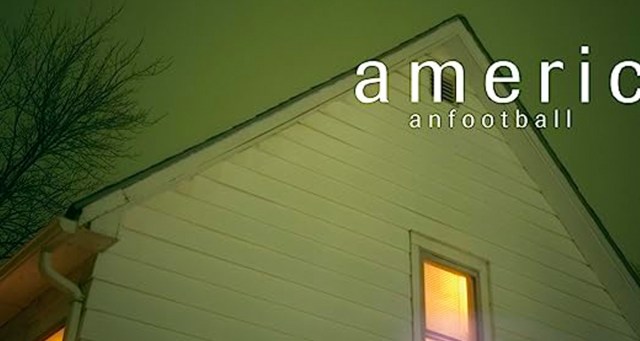
It is entirely possible that “I’ll See You When We’re Both Not So Emotional” is the most emo song title that any band has ever come up with, and that is a very competitive field. Apparently, the songs were given titles basically to wrap up work on the album artwork (featuring the spooky house of a friend of a friend), with all but the instrumentals just using the last lyrics of a track as names. If there’s a spiteful core of the album, it’s this one, which pretty convincingly turns “You may accidentally/ Misinterpret honesty/ For selfishness” into either lacerating self-contempt or the bitch line of the year.
“Stay Home”
The beast of “American Football,” “Stay Home” is over eight minutes long and almost all of its lyrics are “But that’s life, it’s so social.” For all of the impending-autumn melancholy of the album as a piece, the melody of this one is likely the most oddly uplifting of them all. We won’t say it’s a ray of light or anything, but if there’s a part of “American Football” that can convince you that such a thing as closure exists and maybe you’ll be able to move on from a breakup, it’s this one.
“The One with the Wurlitzer”
We won’t lie: it’s a baller move to end an album with an instrumental track and a throwaway title like this one. Nice piano melody, the trumpet takes us out, and we have to go call our ex, just to hear their voicemail. Thanks, American Football.












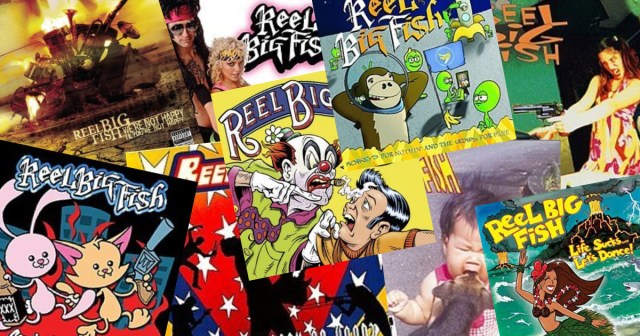
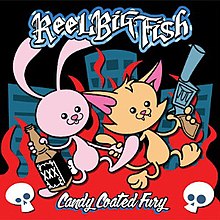 In 2012, after several decades of ska-punking, the Reel Big Fish honed in on their signature “happy music/angry lyrics” combo. It’s literally right there in the album title. This record isn’t bad if you’re already a fan but it feels like a paint-by-numbers RBF album that any ska band could have written.
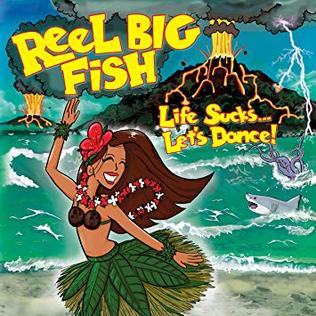 Life Sucks…Let’s Dance! is the follow-up to Candy Coated Fury. Over the six years in between these albums, the Fish continued to double down on their signature songwriting style and cranked out some more sad and dancy songs for the kids, except this time the record sounds a bit more inspired. Still mostly recommended for those already fans of the band.
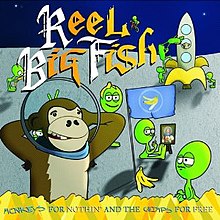 This album is the sound of freedom. Specifically, the freedom that comes from being dropped by a major label. Finally, the Fish could put out any songs they wanted! And what they put out was… well, fine. There are some solid tracks on here but nothing you can’t get from some of RBF’s past (and better) albums. Hell, some of those songs are actually on this record as the band re-recorded some from “Everything Sucks,” which is a big reason this album is ranked above the previous two.
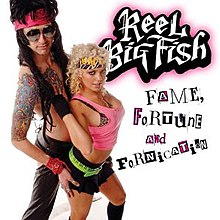 Reel Big Fish is known for their covers. This album contains all the skank-i-fied versions of a bunch of catchy songs you know and love. And some you’re even probably sick of! Like “Brown Eyed Girl.” Seriously, did we really need another cover of that one?
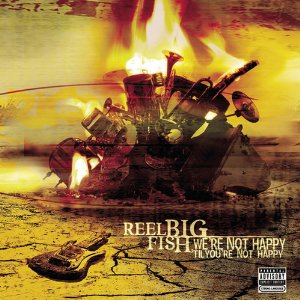 For most of the previous albums on this list, Aaron Barrett’s angry and bitter lyrics target life in general. His scathing words on this record are a little more pointed. At this time in the band’s career, ska was mostly considered a joke in the music industry and on music forums, and this album certainly retorts that sentiment head-on. Fire this one up and pick a fight with a friend over petty jealousy. It’s the perfect soundtrack for that.
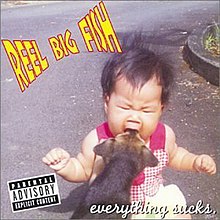 Going all the way back to 1995, this pre-Sell Out record sounds exactly like you’d expect a local ska band to sound in the 90s. Its recording is a little rough and the performances focus more on heart than technique, yet the songwriting clearly shows a promising band on the rise. You can find a lot of these songs re-recorded on future albums but this is a solid and unique listen from start to finish.
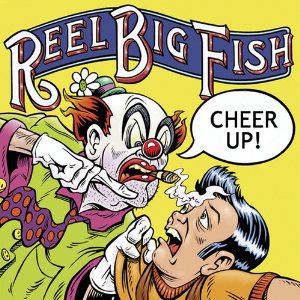 After exploding in popularity for 3 months in 1996, 3rd wave ska was mostly seen as a goofy 90s fad. By the early 2000s, many ska bands were vocal about their record labels rejecting any songs that contained upstrokes or too many horn parts, leading to many ska albums of this time being classified as “rock with horns” by fans. Cheer Up is Reel Big Fish’s “rock with horns” album and it’s fantastic. RBF wrote what could have been the saddest 80s hair metal album if Aaron Barrett was born just a few years earlier.
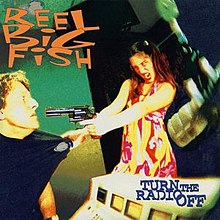 This is Reel Big Fish’s most well-known album. And for good reason: it has a moderately successful single on it which, in perfect RBF irony, is a song about selling out. “Turn the Radio Off” is the album that proliferated the sound most people still think of today when they hear the word “ska.” You can love them or hate them for that, but it’s true.
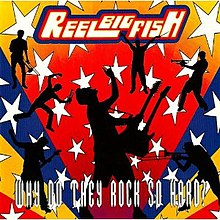 After the massive success of Turn the Radio Off, Reel Big Fish released their magnum opus, colloquially referred to by fans as “White Trash.” WDTRSH picks up where RBF left off by reinventing ska and adding a massive amount of influence from the guitar-heavy bands Aaron Barrett grew up listening to. The lyrics on the album come across as extremely personal and vulnerable. It’s like Weezer’s Pinkerton except without all the… unpleasantness.