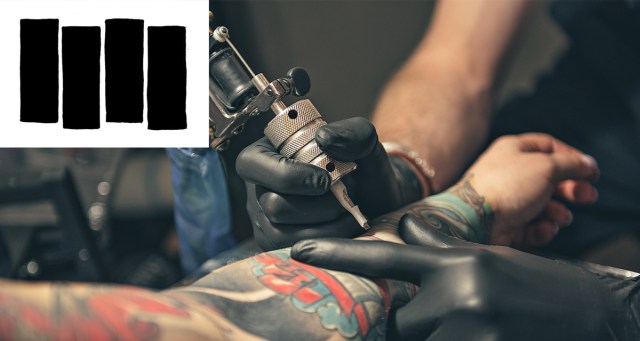
The Black Flag “Bars” logo is one of the most common tattoos you will see on punks and hardcore kids of all ages. But tattooers don’t just hand them up to anyone. You have to know the history of the Raymond Pettibon-designed logo and pass a standardized test before any licensed artist will give you the tattoo. There are currently tattooers serving life sentences in maximum security prisons for tattooing the Bars on someone before they passed the rigorous test.
Since we hate the prison industrial complex we want to make this easy for everyone. Here are the 15 Black Flag songs you need to know before you get their logo tattooed on your shoulder. You don’t have to like the songs, you just have to pretend you do. That’s what everyone else does.
“My War”
The titular song from Black Flag’s 1984 offering and it’s literally the only song you need to know from this album. You could ask a member of the band “Can you name any other songs from ‘My War?'” and they would be like “Of course we can, that’s a stupid question.” Then they would pretend to get a phone call and be like “Sorry, I gotta take this. I think my wife just exploded.”
“TV Party”
We live in hell, and that means there is a distinct chance that the current version of Black Flag re-records this track as a song called “TikTok Party.” If that happens I’m going to call 911 and have Mike V arrested for murder. Anyway, the EP version of “TV Party” is slightly better. If someone says otherwise you can also remind them a third version was recorded for the “Repo Man” soundtrack and then you can kiss.
“Police Story”
If want to score extra points with the oldest guy in the room you just casually say “Yeah, the Dez version of ‘Police Story’ is probably my favorite.” And the old guy will cross his arms and give you a knowing nod. If he tries to follow up with any other questions just say “Yeah most of my favorite stuff is pre-Henry” over and over again.
“Nervous Breakdown”
People say that men often don’t talk about their feelings. But that doesn’t apply to this song, Keith Morris is being very direct about his mental health and he’s very ahead of his time. A lot of macho hardcore guys would never admit they are going berserk. Play this song for your therapist next time you feel a little burnt out at your graphic design job. (And yes we know Greg Ginn wrote the lyrics to the song.)
“Rise Above”
This is prime Rollins firing on all cylinders. He hadn’t started growing his hair out yet, his shorts were still a somewhat respectable length, and most of the songs he sang on clocked in at under three minutes. Sometimes it’s easy to clown on Rollins, then you hear this song and remember why so many people make liking Black Flag a good portion of their personality.
“No Values”
If you are going to get this logo tattooed then you are going to need to know at least one song from every one of the people they tried to make their lead singer back when the band was first starting. This is Ron Reyes at his finest, three decades later he would reunite with Black Flag and be booted out of the band in the middle of a show in Australia by Mike Vallely. Ten years later it’s still very weird, just waiting for Mike V to get booted mid-show by a Boston Dynamics robot or something.
“Gimme Gimme Gimme”
Another song with multiple versions, just go ahead and pick which vocalist you like best. But please know this; if you say “Gimme gimme gimme one of those Blag Flag tattoos” to someone at a tattoo shop they will be forced to break all your toes with a hammer. And when we say “break your toes” we actually mean they have to hammer your toes until the bones are ground down to dust. We don’t make the rules.
“Six Pack”
Everyone loves a song about drinking and getting wasted. But is this song a celebration of being a drunk, or is it a satirical takedown of drinking culture? These are questions you should not be asking. Just smile and nod when listening. You aren’t here to be the world’s premiere Black Flag scholar, you’re just trying to get a dumb tattoo.
“Clocked In”
This is one of the better songs about hating your job. Every punk band needs their “I hate my fucking job” anthem and this is Black Flag really laying it on thick. Anyone that needs to use a time clock to punch into work should have this song playing on repeat in their head until one day they go into their boss’s office and beat the crap out of him in front of everyone.
“Depression”
Again we have Black Flag being ahead of their time in talking about mental health issues. 40 years after this song was released we still have men who can’t admit they are struggling. We do think Black Flag could have been a bit more direct in their lyrics about how to find a therapist because it’s not as easy as you think. The last therapist I had called me a “dumb pig” and told me to “bite the propeller of a moving speed boat.” Kind of fucked up.
“White Minority”
If you want to find out if your friend is a secret racist this is the song for you. Play it in your car and if your friend hits the “White pride” lyric with a little too much gusto then you know they are a piece of crap. Also, it’s shocking this song has been co-opted by the Right and taken at face value.
“Revenge”
We don’t actually know what they mean when they say “I got a gun on my back” in the opening line of this song. Like someone has a gun pressed against your back? Are you carrying a rifle around like some second-amendment warrior trying to prove a point? Either way, songs about revenge are always solid.
“American Waste”
By this time you have probably noticed a pattern. There sure are a lot of pre-Henry Black Flag songs on this list, and you know what? That’s because Black Flag’s early stuff was better. They basically invented the entire concept of “getting worse with age” which was perfected by bands like Green Day and Offspring. You won’t find any six-minute songs or spoken word entries on this list. Just punk songs about being a total piece of crap.
“Jealous Again”
Initially the “Jealous Again” EP was meant to be Black Flag’s first full-length but Keith Morris abruptly quit the band and this started the revolving door of singers. Just think, if you were in Hermosa Beach in 1980 and you knew the lyrics to a few Black Flag songs you could have been the person fronting this band. Henry Rollins would have never come to L.A., maybe he would have climbed the ranks at Häagen-Dazs and been the CEO by now. You basically ruined his life. That is why you need to know this song today.
“Fix Me”
This is it, the last song you need to know before you can finally get your tattoo. Congratulations, now you can pass yourself off as a real Black Flag fan. If someone tries to talk about how the songs on “Loose Nut” and “Family Man” are underrated just ignore them. They are liars or they suffered some sort of head injury. Go forth, claim your tattoo, you’ve earned it.
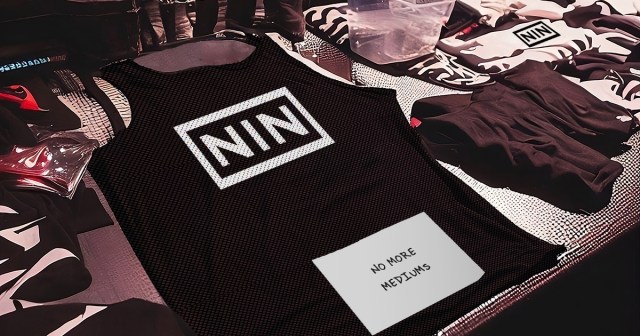
Go pick up our latest shirt. It’s a rip-off of the Black Flag bars, nobody has ever done that:
/**/





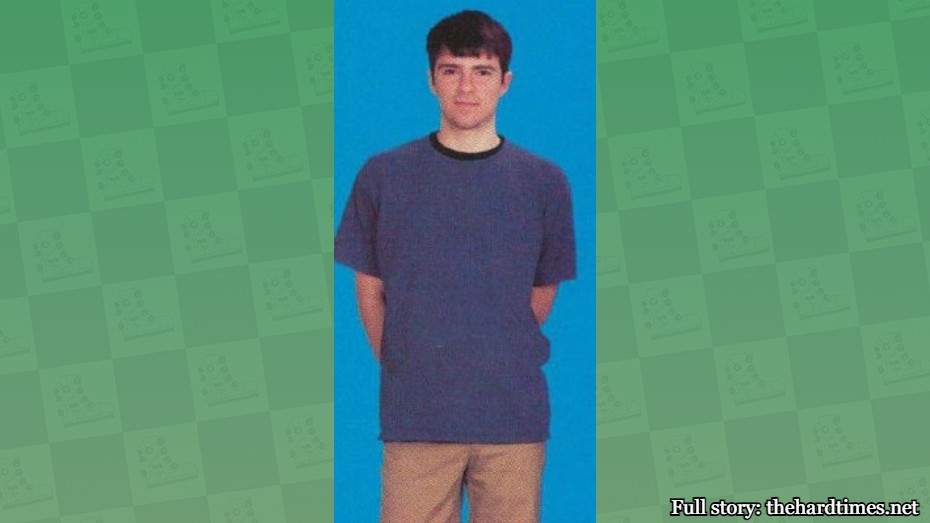 I guess I’d put this on if I was an 8-year-old ring bearer, but my nephew Walter already has that job and that kid bites real hard. He had the nerve to tell Randie that I was smoking cigarettes in the her bathroom during Thanksgiving dinner last year, I wasn’t smoking. I was snorting pills.
 Not sure what’s going on here, but this album is where Pat’s hair loss becomes really obvious. Well, mine’s falling out too and I think it’s probably because when I was 18 I tried dipping a joint in Nair to see what would happen. Anyway, I don’t want to bring any more attention to that. Especially with a weird print t-shirt and a pair of Sketchers.
 This is the only album cover Mikey Welsh appears on and he looks SO uncomfortable. Almost like his mom dressed him for the shoot and he fought her on it the whole time. If a guy who previously played in a band called Left Nut can’t rock a fit with confidence, I have no chance at all.
 It’s hard to tell what’s going on in this picture, but whatever it is, it makes me anxious. He looks like an off-duty cop that wants to beat the shit out of someone trying to shoplift a trinket from a store on the boardwalk. Hard pass.
 It’s almost as if the band realized Shriner looked way too tough to play in Weezer, and honestly, anyone that signs up for one cardio kickboxing class is probably too tough to play in Weezer. This forced them to dress Scott up like an awkward 7th grader to compensate. Well, last time I went to a gym they called the cops on my for drinking the hand soap.
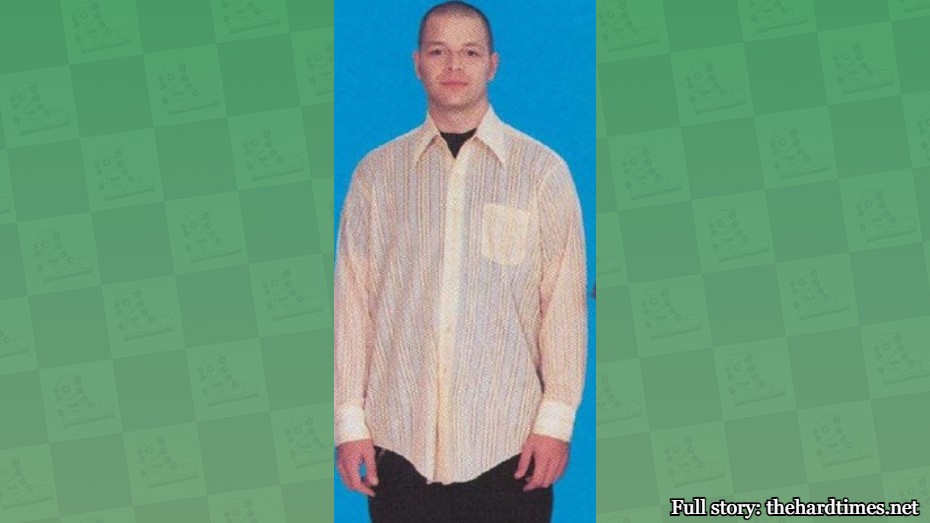 This one just screams “It’s laundry day and I’m out of quarters.” I get that drummers need to dress comfortably but that shirt is very see-through. Last time I wore a see-through shirt my parents saw my “Fuck Me Raw” tattoo on my back and wrote me out of the will.
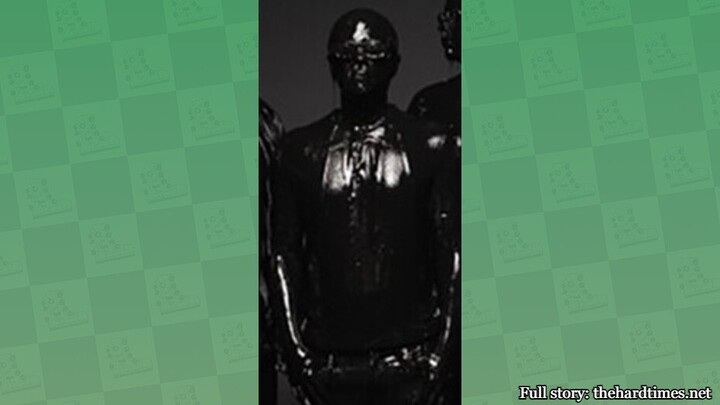 Remember when Wile E. Coyote would be chasing the roadrunner and he’d set up an elaborate trap involving a bucket of tar, but end up getting the tar poured all over him, then just stand there looking defeated? That’s what Rivers looks like here. Not the vibe I’m going for.
 This guy is way too handsome to play in a dorky band like Weezer and he knows it. He can probably wear a Wegman’s bag and make it look like high fashion. The military jacket with the strappy things on the shoulders is a little too Franz Ferdinand for my taste, though.
 This one’s giving off serious “what did you think of my improv show” energy. Maybe my cousins from West Virginia would think I’m cool and artsy, but they’d most likely have a lot of (correct) assumptions about my sexuality.
 Once again, it’s hard to tell what’s happening here, but his posture is oozing with pretty boy confidence so I’ll trust that the fit is a homerun. If only I had his lion’s mane of hair and not something akin to Bill Murray in Scrooged.
 Randie LOVED to dress me up in girl’s clothes when I was little, so maybe I’ll beat her to the punch with this one and roll up looking cuter than the maid of honor. What could possibly go wrong?
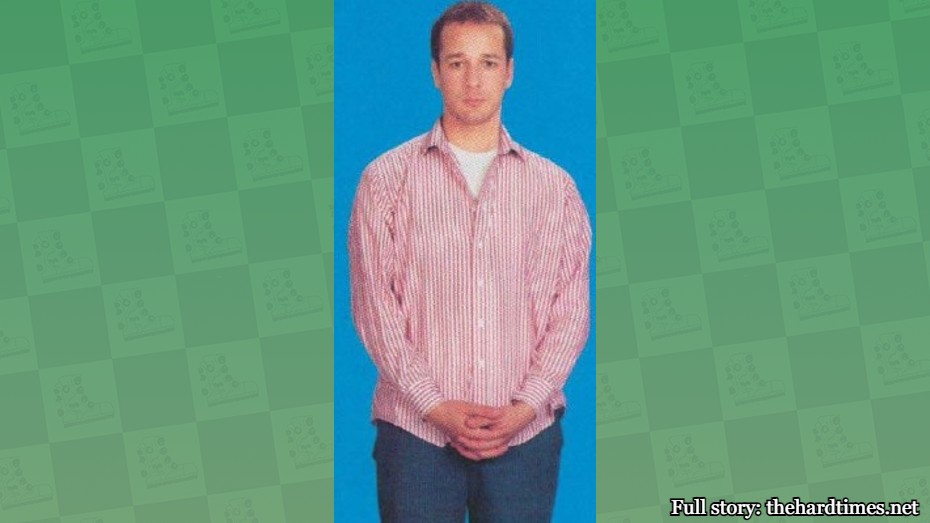 This one’s giving me “we just had a night of great sex and I’m making us pancakes” energy and not quite wedding material. If only I could make the disheveled look as endearing as Matt Sharp does. I honestly can’t remember the last time I had sex. I know I cried a lot, and my wallet got stolen.
 This strikes me as a young, hip college professor that definitely hooks up with his students. At some point I’d have to pull out my pocket watch and declare that I’m late for my Burroughs book club meeting.
 Not gonna lie, showing up to a family function looking like a deep background actor in “Road Warrior” would be delightfully antisocial. Might need to employ a fog machine. Strong contender, but the wedding is in August and I sweat more than doctors think is humanly possible.
 Maybe my wedding gift to Randie will be flashbacks of the time I learned how to play “Basket Case” and would terrorize her by playing it at full blast at all hours of the night. But I pawned my guitar a few years back to get my nipples pierced. Then I pawned my amp to pay for medications to cure the infection I ended up getting. Keep your nipple piercings clean people.
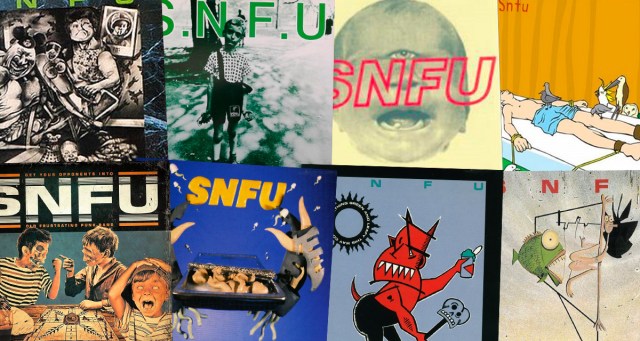
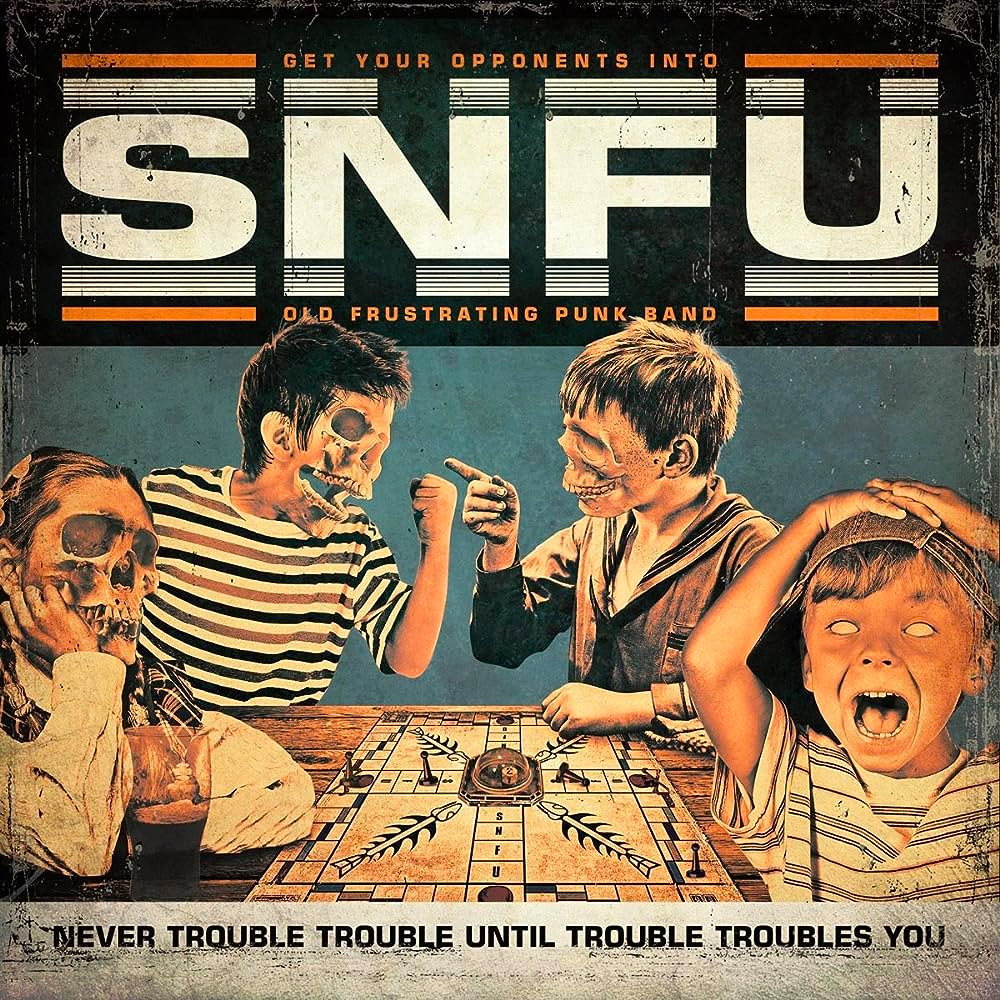 It would be easy to dismiss the only Belke-less SNFU album for that fact alone, and that’s probably what we’re doing. Still thrashing and tight ‘til Tuesday, the guitars are missing the brothers’ radioactive/mutant quality, much easier to notice when it’s gone. The late Mr. Chi Pig is belting out his cutesy horror lyrics nearly as well as ever and, coming out of a rough period of addiction and homelessness, that’s a more impressive miracle than getting a crowd to make really tiny fish sandwiches or healing some jerk with leprosy. Let’s hope he gets resurrected faster than this other guy.
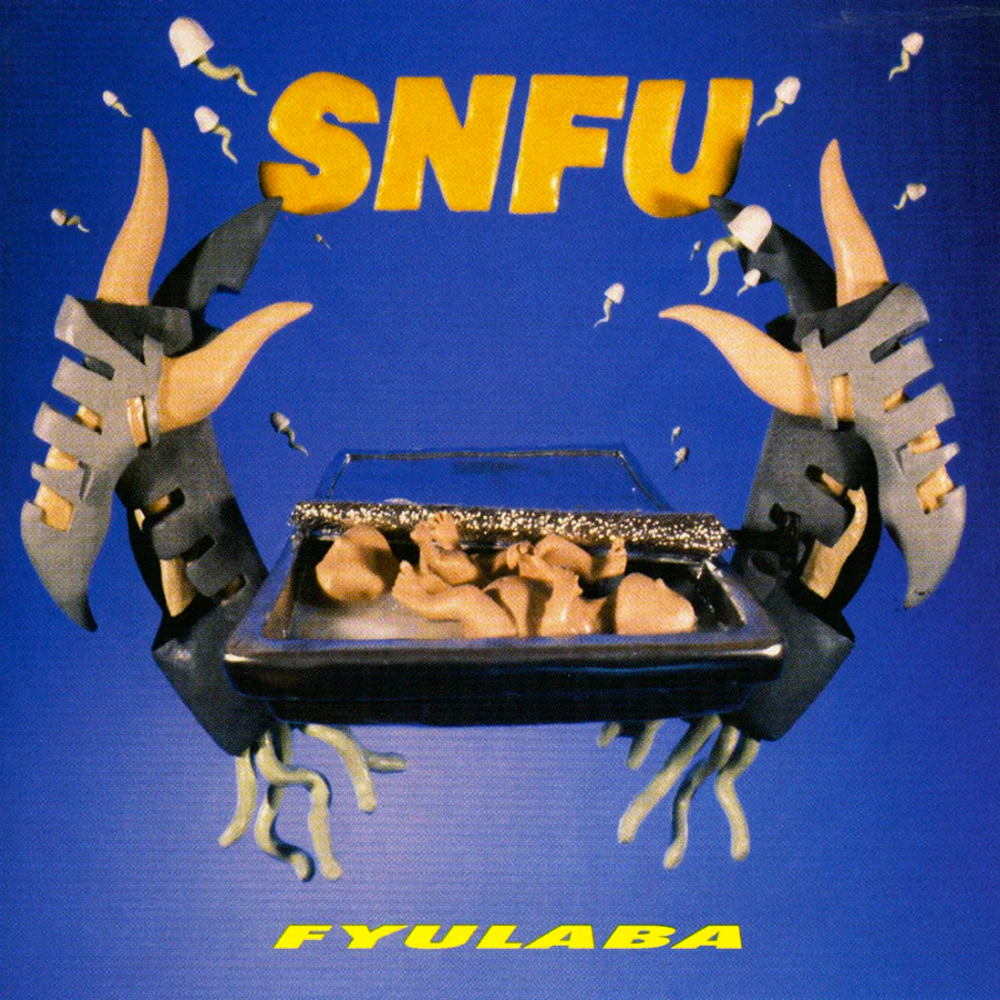 Geography dictates that there are countless similarities between Vancouver and Seattle. Trees and mountains are everywhere, it won’t stop raining, and hard drugs could feasibly be elected Mayor. This is a very Vancouver album – green and grimy and soaking wet and Bif Naked is here – except for the song that takes place in Virginia with Lorena Bobbitt cutting her husband’s cheating doodle off. That’s cool, but it’s a 3,000-mile jump in location. Was no one paying attention to continuity?
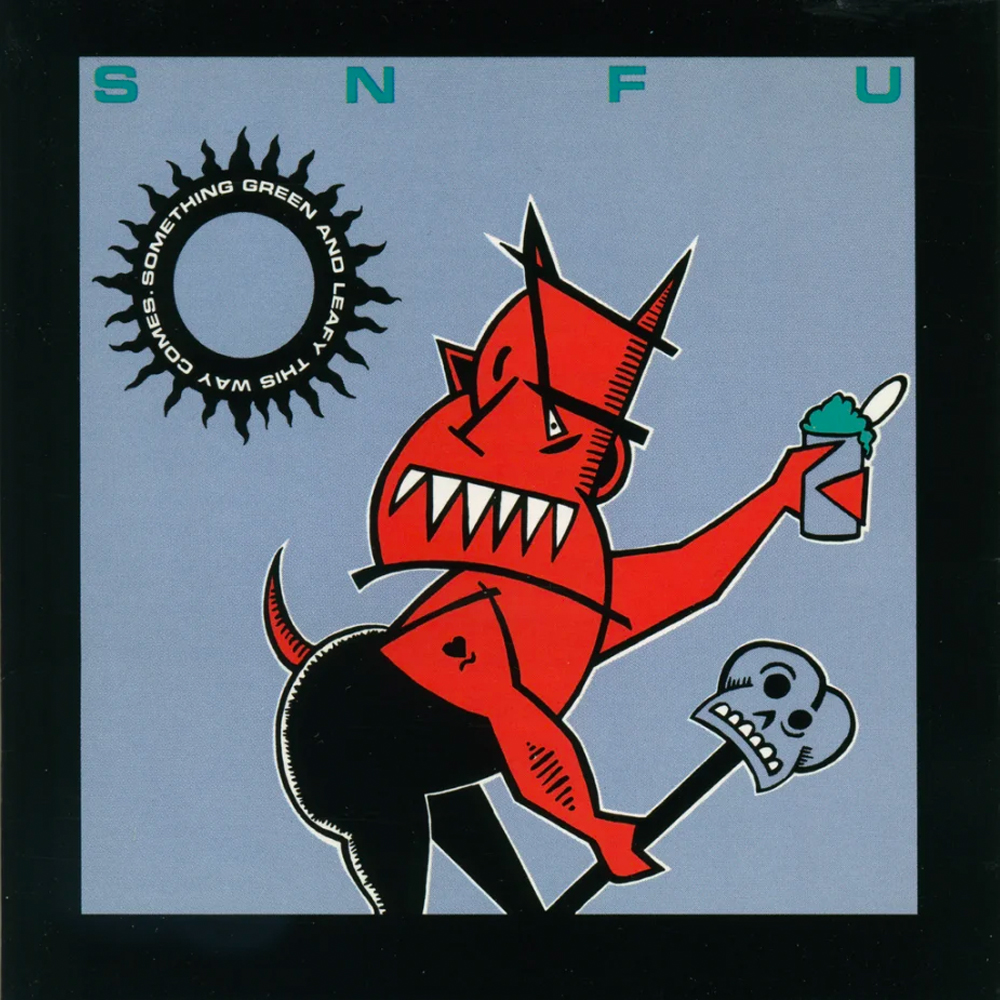 There weren’t many SNFU shows without “Reality is a Ride on the Bus” or “Painful Reminder” in the setlist, and there are other gems on this album too – but when an emergency rehab stint a few days into recording sidelines your producer, you may lose some of the sonic intensity you were hoping would be your top cherry. The blazing Belke attack is somewhat neutered, and that snare drum is bordering on Snapcase. Chi is, as always, a suitably jovial/disturbing host.
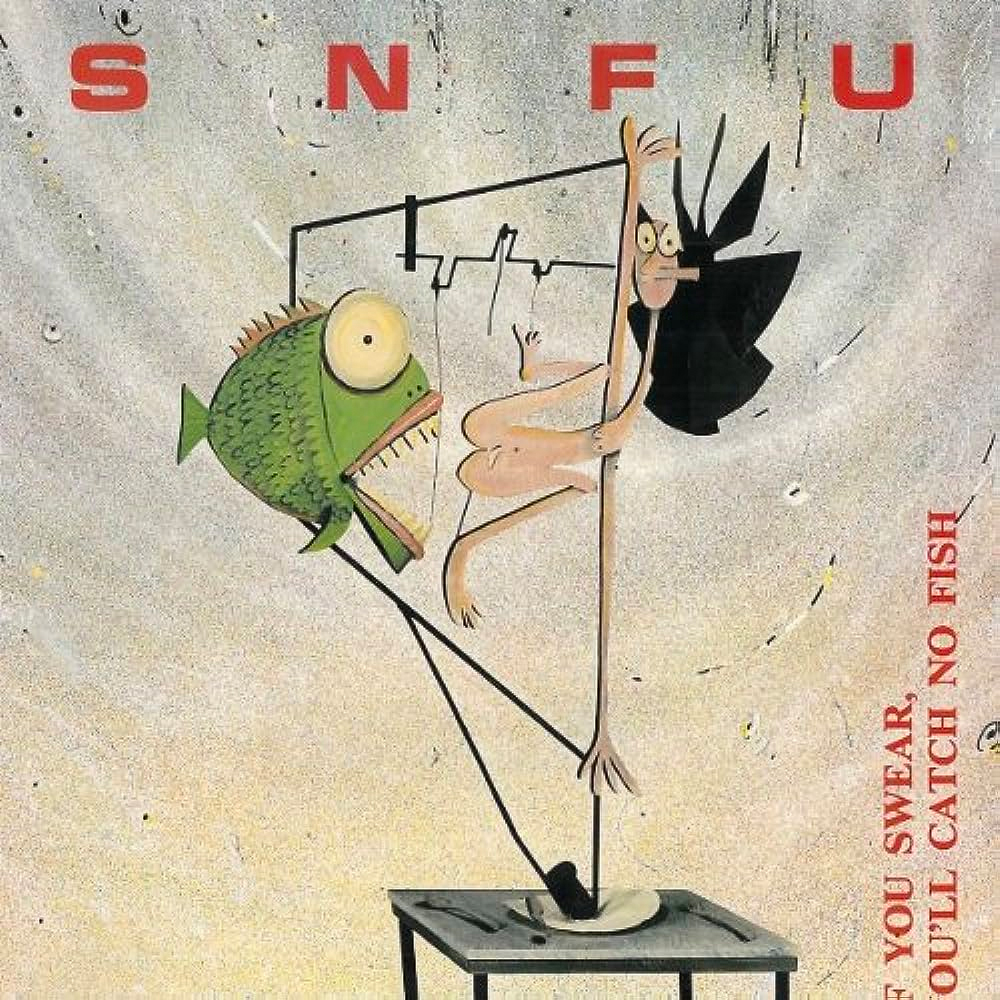 Fresh off of pretty much inventing melodic hardcore, these freaks are already fucking with the formula. “What if Jerry Lee Lewis was Darby Crash?” seems to be the seed of “The Devil’s Voice,” while “I Forget” sounds as if AC/DC had their first show at the 9:30 Club. The only problem here is the blatant lie in the title – you had at least one grandparent who both cursed a blue streak and could easily snatch up a rainbow trout with their bare hands.
 Leading off with an ad for their new venture as futon salesmen, SNFU are all business on this record. Sure, for this band a G.I. Joe coming to life and raging with murderous penis envy is all in a day’s work, and laying the groundwork for the entire future of skate punk is something you can just do whenever you feel like it. Seriously, go out to your garage right now and try it. Just watch out for that old box of action figures.
 One of those “instant classics,” a term so overused it lost all meaning until it was brought back to life by the writing of this article. This instant classic hits the ground not only running but already chasing down prey – it’s speedy, it’s thrashy, it’s gnarly, it’s… catchy?! Sure is, and we can still hear the influence of this album today. Also noteworthy is that this band is from Edmonton, which until now we thought was a fictional city like Metropolis or Saskatoon.
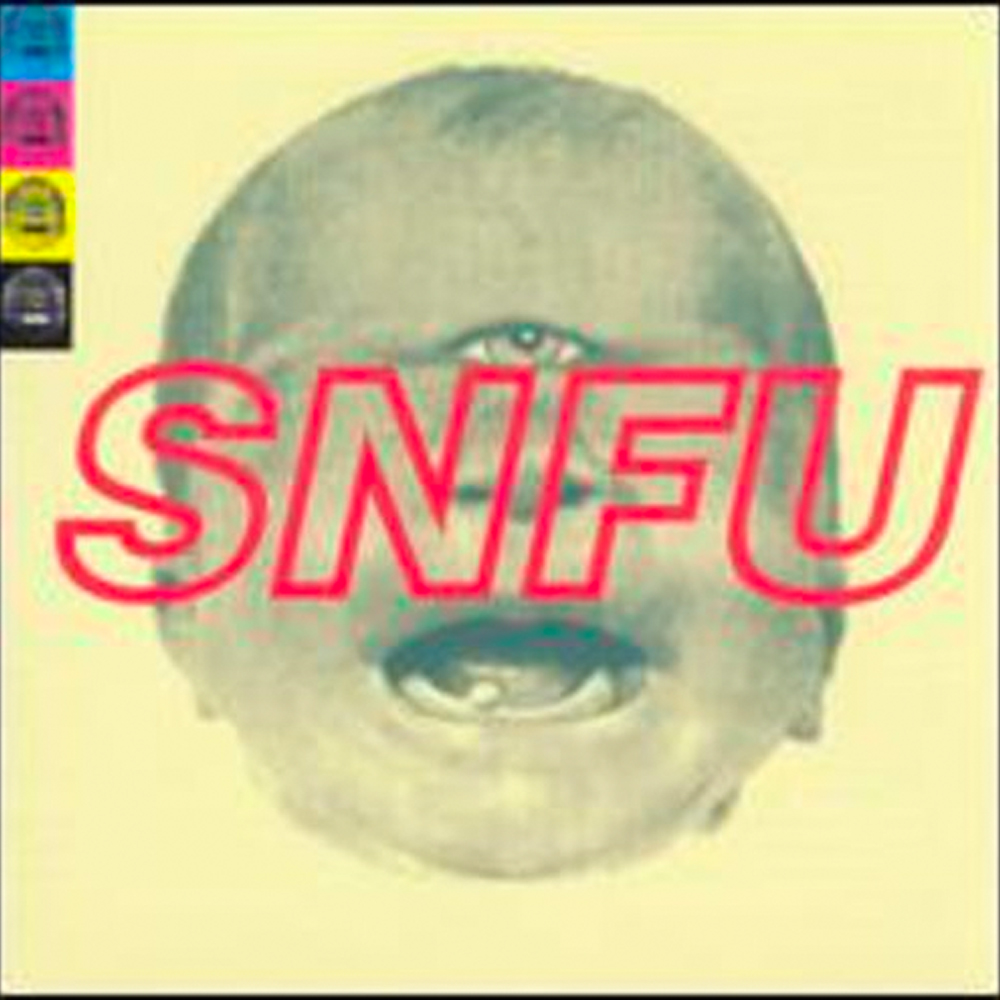 The mid-’90s were a pivotal time for SNFU. Punk records were finally sounding like they were made in a real studio with real engineers, which was good because at the time they were selling an absurd amount of them while writing the catchiest shit ever. This was also a time when science was the closest they’d ever gotten to figuring out what the fuck is happening on any of the band’s album covers. Looking at them for an extended period is discouraged, you’d have a better chance of staying sane if you were taking care of a remote mountain hotel for the winter.
 At the time of its release, many had forgotten about SNFU or assumed they had petered out the way bands do. Unexpectedly, after eight long silent years, they unleash this blast of speed, riffage, and absurdity that tears through town like a tornado. The playing is sphincter-tight and Chi Pig is in top form on both the page and the mic. When those burners are firing, they can go places that no one else can. If we have the guts, they’re happy to take us along for the ride.