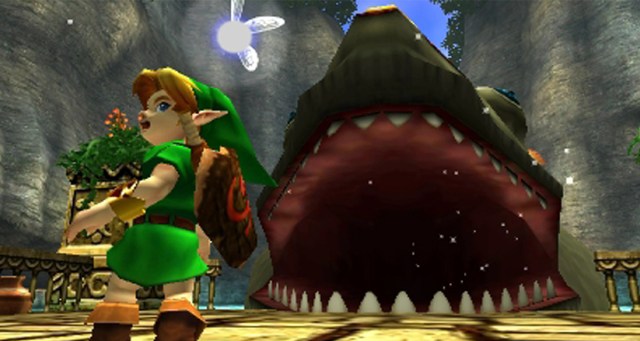
Everyone knows “The Legend of Zelda: Ocarina of Time.” Literally everyone. It’s universally regarded as one of, if not, the best video game of all time. Perfecting what Super Mario 64 started, its combination of gameplay and story makes it the gold standard for RPGs to this day. To add to this greatness, the game incorporates music in a way that had never been done before, thanks to the demi-god and O.G. punk that is Koji Kondo and his never-ending well of theme music.
While the music of the game has been heralded since its release in 1998, we can’t help but think that some of these places in Hyrule would be pretty badass for a show. So bust out your ocarina and grab a handful of odd mushrooms, because we ranked every dungeon based on how well it would serve as a music venue.
We used the Lens of Truth while writing this, so no need to argue with us over the order. It said that the three mini-dungeons don’t count. No one is going to a show in a fucking ice cavern.
9. Inside Jabu-Jabu’s Belly
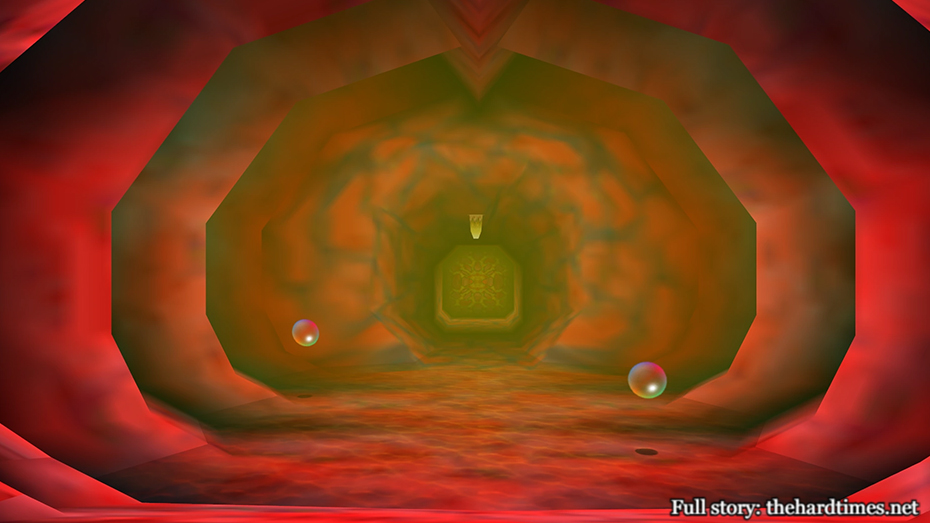 There was no way this wasn’t going to be the worst venue on the list. You’re inside a literal whale stomach. Not even sure if it’s a whale. It’s some sort of fish god that the other fish people worship that wears a crown and has a belly ache. It’s hard to imagine what the smell would be like in there… probably similar to a crust punk show at a VFW hall on a 95 degree day. Also can’t imagine what type of band would even want to play in such a venue. It screams exclusively gore metal or some shit. No thanks.
8. Ganon’s Castle
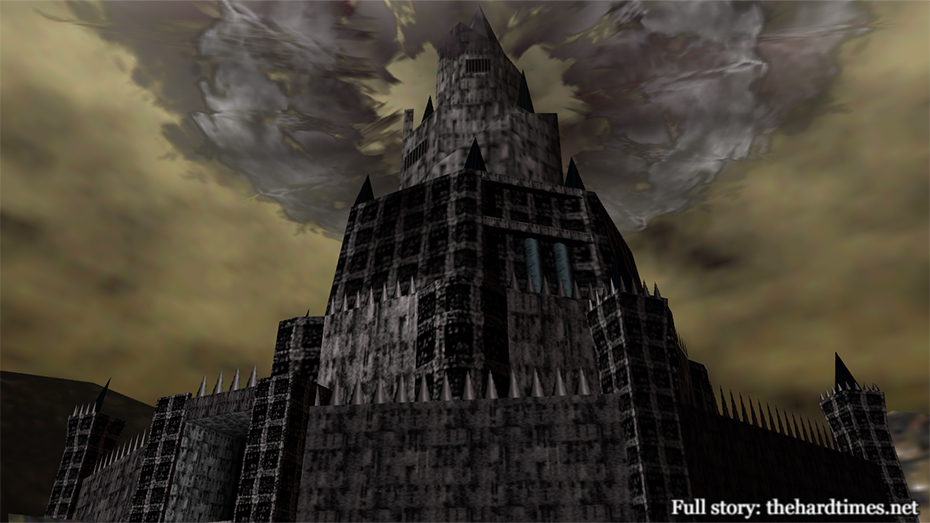 Obviously the biggest on the list, this venue is reserved for stadium acts too big to play the small rooms they started out in. It’s close proximity to the downtown area, sitting just outside the city, you have to climb a shit ton of steps to get to where you gotta go (and the higher up you get, the more difficult people are to deal with), and when it’s over, you have to rush out as quick as you can to beat traffic. Not to mention it costs 99 rupees just for a bottle of water. All that to say, not my kind of scene.
7. Water Temple
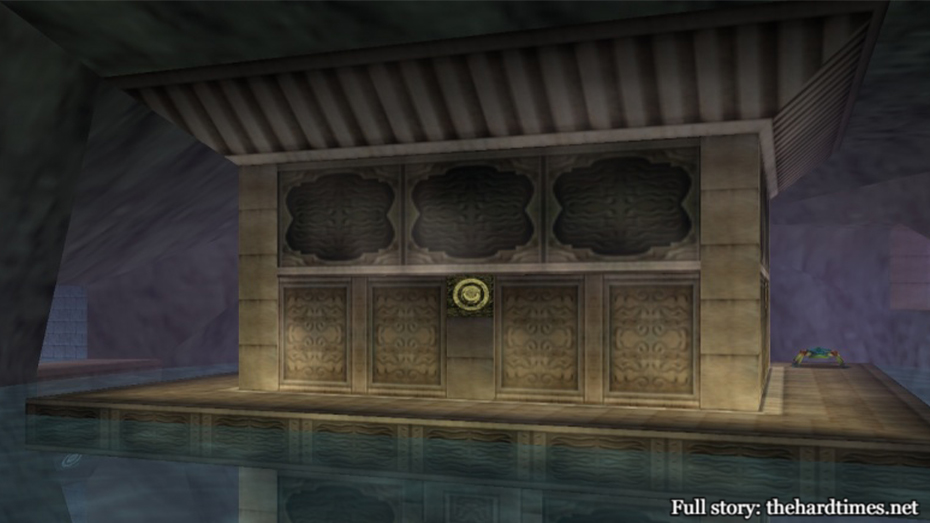 I’m sure there’s a metaphor in there somewhere about the venue being “underwater” depending on what music you play, but let’s go the less obvious route: this is an EDM festival’s dream site. Think about it… the layout is confusing as all hell, you meet up with your friends as soon as you walk in, only to immediately lose them trying to follow them, and don’t find them again for the rest of the show. Not to mention you’re on so many drugs that you have to battle to suppress the deepest, darkest version of yourself to continue. The irony is that maybe in my younger days that would sound fun to me, but now that I’m an adult, you wouldn’t catch me in this setting at all. Not by a longshot.
6. Shadow Temple
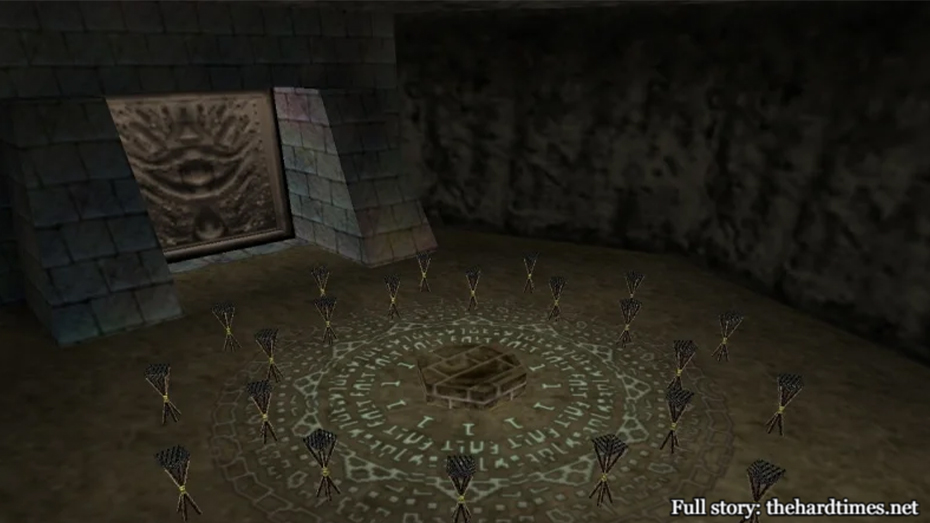 Has there ever been a more obvious goth venue than the Shadow Temple? It’s in a graveyard for Christ’s sake. “What is hidden in the darkness… Tricks of ill will… You can’t see the way forward” “Make my beak face the skull of truth. The alternative is descent into deep darkness.” These may as well be lyrics from The Art of Drowning. What’s worse, the place is run by a bongo player. A fucking bongo player. Even bassists look down on bongo players. Although, not going to lie…how fun would it be to headwalk off a stage across an audience with the hover boots on, only to get to the pit and keep floating on air until you reach the back crowd and continue headwalking?
Honorable Mention: Temple of Time
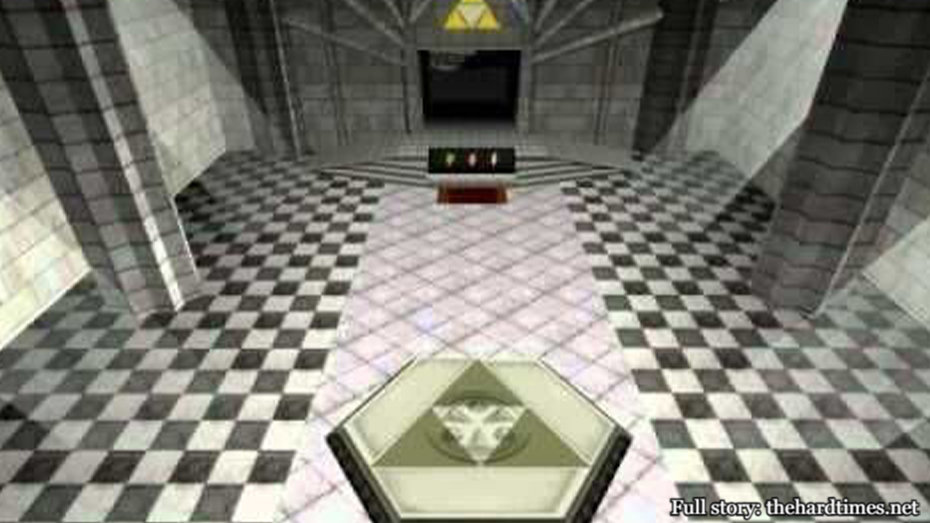 While not technically a dungeon in the game, we’d be remiss not to mention this absolute specimen of a venue. Think Limelight in the ‘90s. You just know some wealthy Hyrulian with millions of rupees would have bought it and put a techno club in there. A place where all the creatures of the land could come together… Zora, Goron, Kokiri, Sheik, Gerudo, whatever the fuck a Deku Scrub is, all tripping balls partying with one another. That’s the future Hyrule deserves.
5. Forest Temple
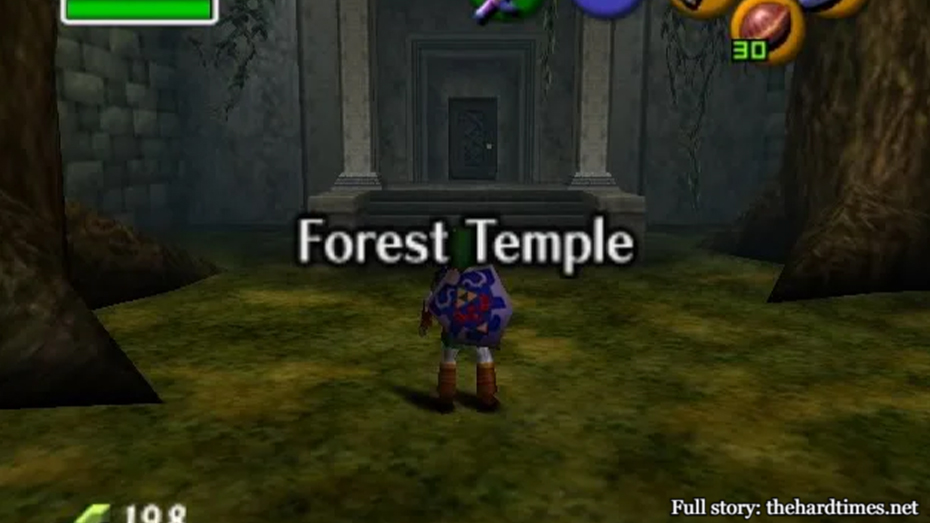 Needing some medieval weapon to even access it? Giant skeletons in armor waiting inside to challenge you to a swordfight? Being in the middle of a literal forest? Sounds like a black metal show to me! The venue is even owned by an “Evil Spirit from Beyond” who has pictures of himself on horseback all over the office. You just know that Dimmu Borgir or Goatwhore would tear the roof off this temple.
4. Dodongo’s Cavern
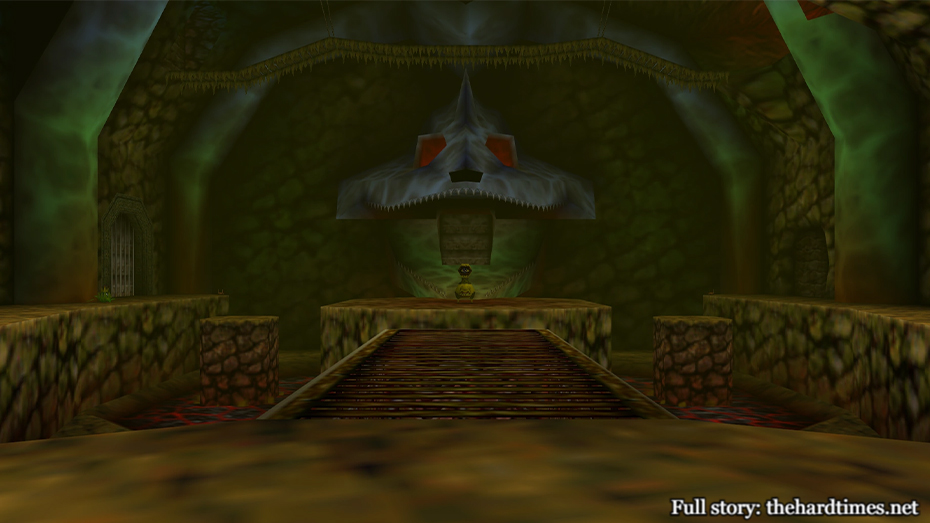 While the giant dinosaur skull in the main entrance room screams metal, this venue feels like it could pull double duty and host a good rap and/or hip-hop show. There’s Lizalfos with knives trying to stab you in multiple rooms and pyrotechnics galore. Where else would you be able to get a “bomb bag,” if you catch our drift? The type of bag you’d need the worlds finest eye drops after. Infernal Dinosaur is the most metal band name ever, while King Dodongo sounds like a member of Wu Tang Clan. Also, Ocarina of Rhyme made a sick remix of No Jumpercables by Aesop Rock using the Goron Village theme.
3. Spirit Temple
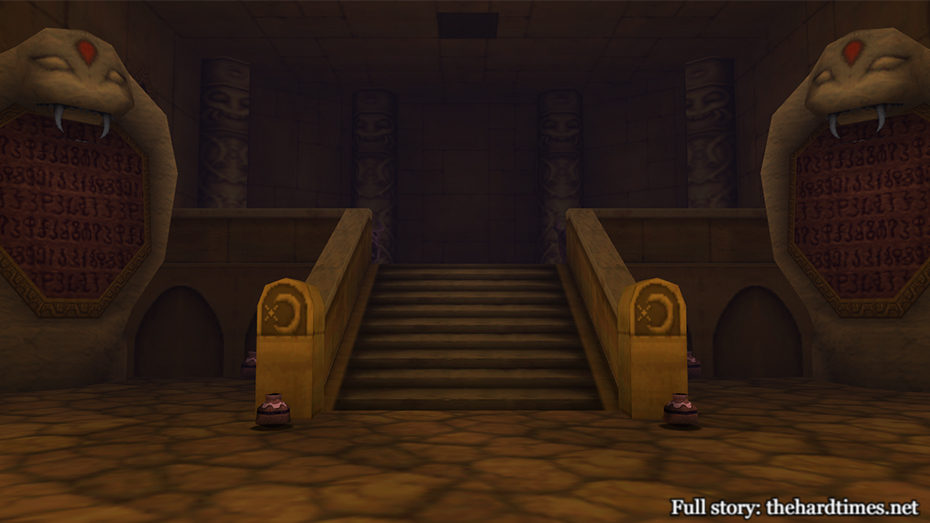 Finally, an all ages venue that both kids and adults can go to. This temple is located in the middle of a desert and focuses heavily on the spirit, which kinda feels like a fine place for a Krishnacore concert. Think of Porcell and Cappo as the two witch sisters who run the venue that can only be defeated with a “magical mirror.” Pretty sure Iron Knuckle is a Shelter cover band actually.
2. Fire Temple
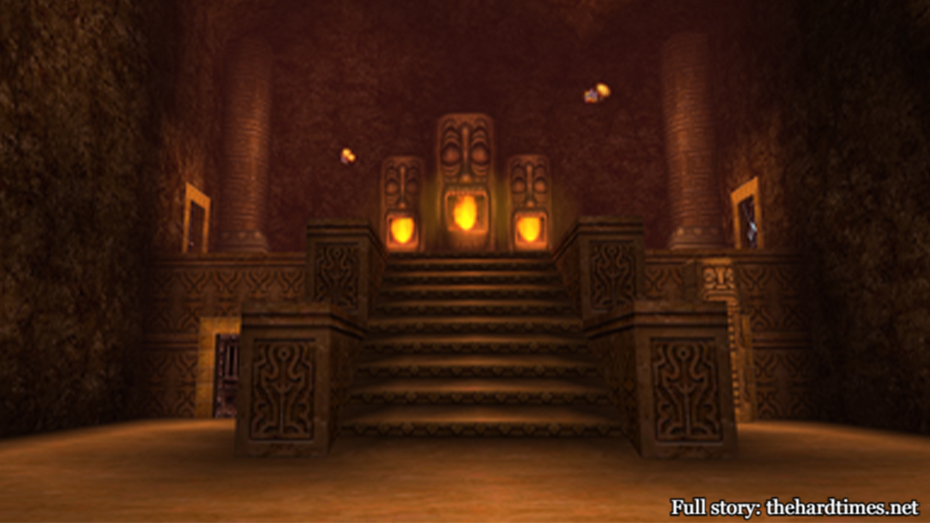 This venue is metal as fuck. It’s in a volcano, has a fucking dragon flying around, and you get a war hammer to start fucking shit up with. And above all that… it’s HOT. You need a special fire-resistant hoodie just to get in. There’s even a guy who you’ve met exactly one time in your life who is waiting as soon as you walk in the door calling you his sworn brother. It sounds like every metal show I’ve ever been to. Replace the controversial chanting music of this temple with Dragonforce and no one will bat an eye.
1. Inside the Deku Tree
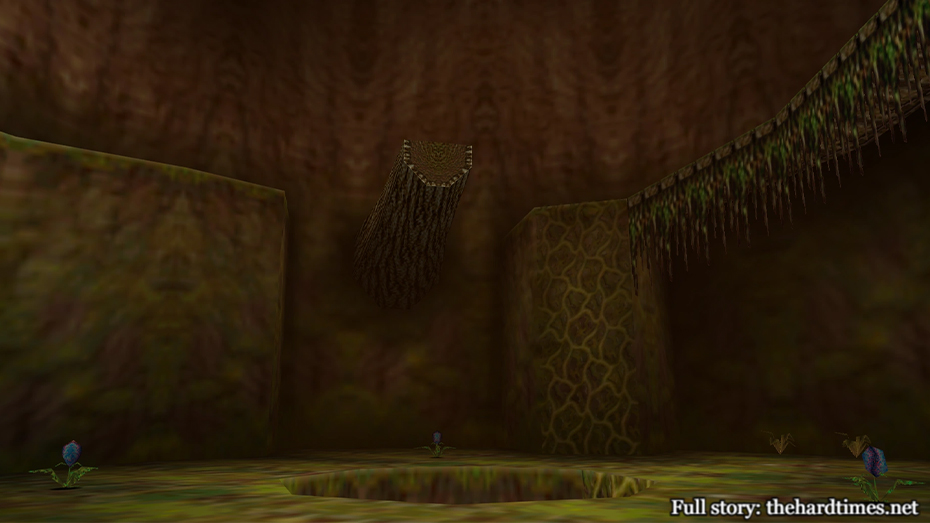 Ever see a flyer for a house show that says “ask a punk” instead of listing the actual address? The Deku Tree is every punk house you’ve ever been to. There are cobwebs everywhere, a gigantic spider seems to run the entire dungeon, and its owner is on his deathbed after being afflicted by a mysterious illness. On top of that, there is some punk kid blocking the entrance until you can prove your street cred. You can imagine seeing the likes of Discharge or Aus Rotten in the basement where you fight Gohma. In fact, Parasitic Armored Arachnid sounds like a crust punk band if I’ve ever heard one. With wood everywhere, the acoustics would probably be awesome too. If this venue actually existed, it would go down in the history books with the likes of City Gardens and Gilman.
If you’ll excuse me, my owl is here to pick me up. A Gossip Stone told me Drain is playing a free pop-up show at Lon Lon Ranch. Now where did I put those Hover Boots?
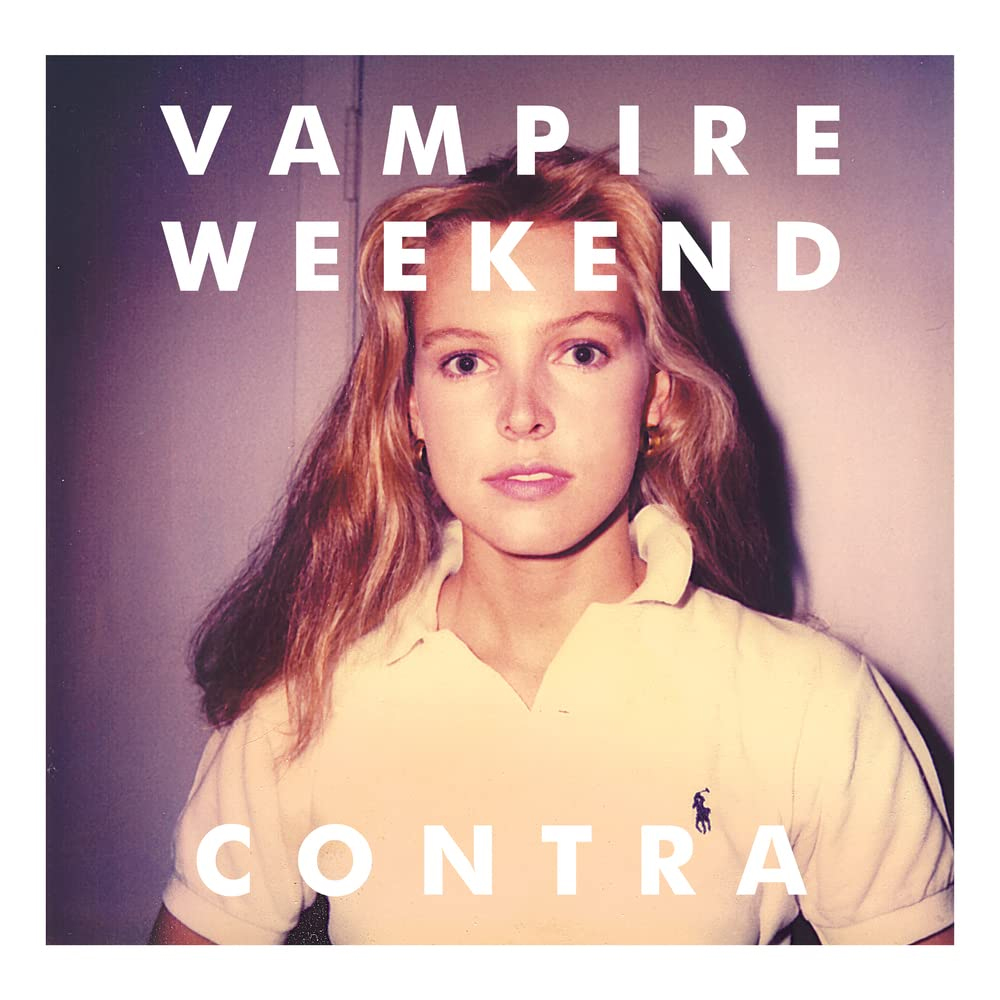 What made their debut so fun and listenable just two years earlier was the mix of fun and catchy pop songs with a variety of sounds that were very openly taken from different musical styles and cultures. But Vampire Weekend’s sophomore effort “Contra” kinda feels like they left out the passion and just went “what if we really Paul Simon’d this shit out of this?” Because what it mostly lacks is authenticity. While their debut came off as college kids having fun with different styles at first, “Contra” sounds more like grad students trying to explain a different culture to a person from that culture. They probably get a few things right, and sure it seems like their heart is in the right place. But c’mon. Read the room, bro. Read the room.
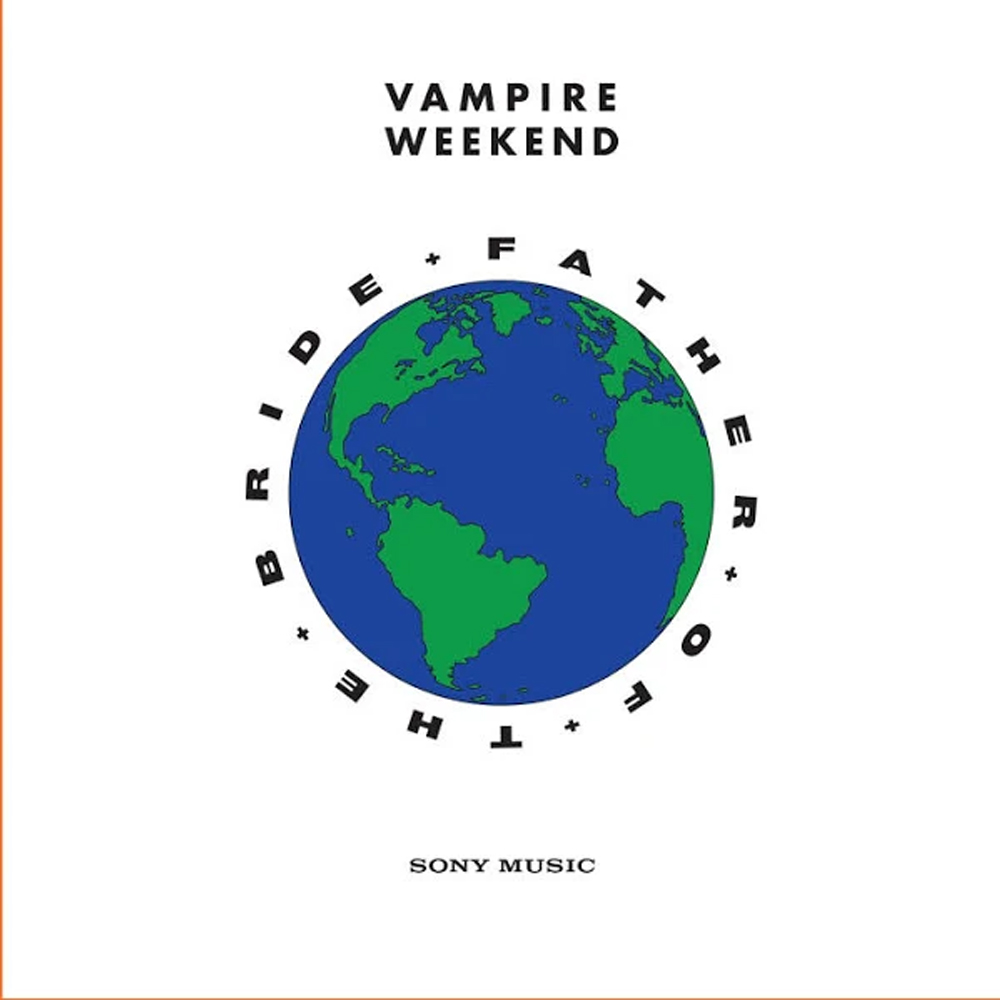 After the release of “Modern Vampires,” the band amicably split with keyboard player and co-composer of pretty much all their stuff, Rostam Batmanglij. The first album without a seminal member of a band is always gonna be tough. Do you hire someone new and better and show that you’re just as good? Or do you write a bunch of songs that don’t feature what that former member did, and prove you genuinely don’t need them? Well if you’re our Weekend Vampires, you do neither and instead go for quantity. Of what, you ask? Literally everything. Songs, guests, instruments. “Father of the Bride” goes hard on all those things. And the results are mixed. Some great songs, some not-so-great songs, but overall too many songs. The single “This Life” is honestly one of the band’s best, and the lyrics are clever and depressing, one of our favorite combos at ye olde Hard Times. But by the second half of the album just drags so much. And that’s not the vibe bro. That’s just not the vibe.
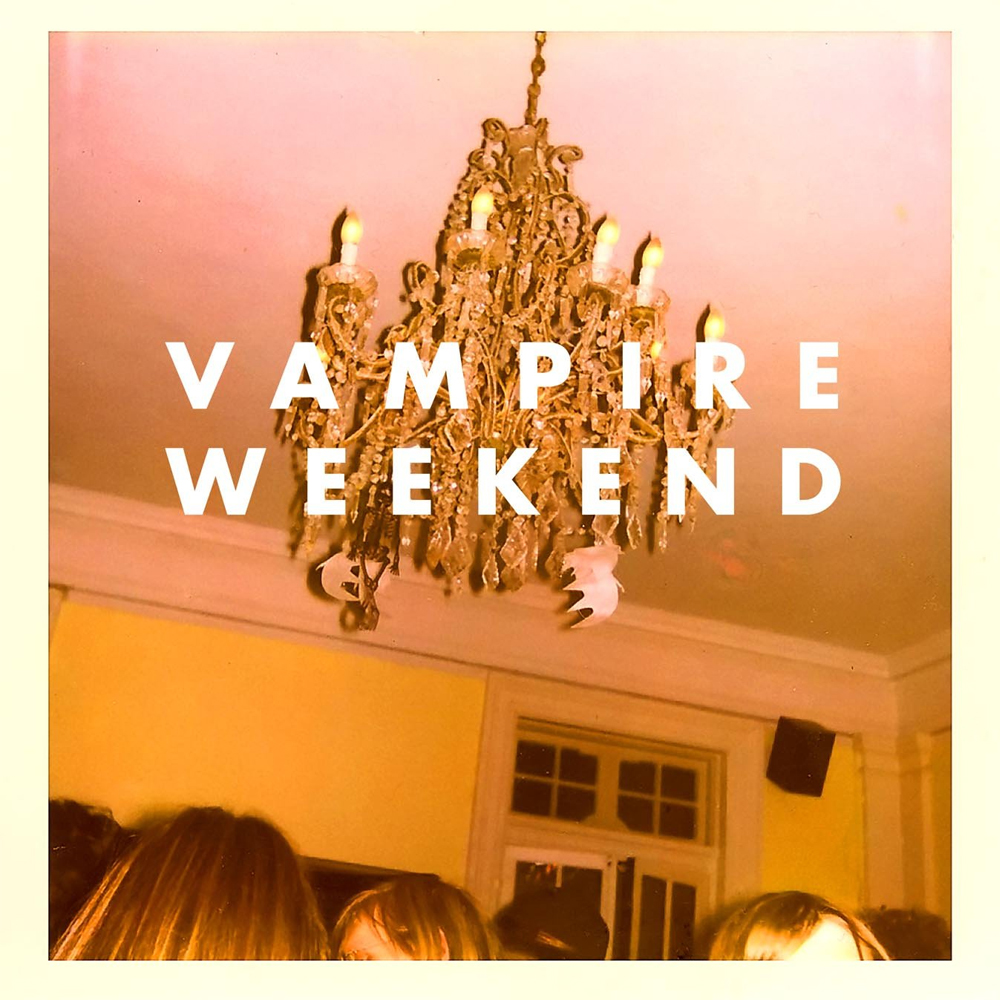 Out of the blue, this band was everywhere. The radio. The internet. Late-night talk shows. SNL. Absolutely everywhere. Not only that, but they were also adorable. And their songs were catchy and danceable. There was a semi-punk sensibility to what they were doing while also not having a classic punk sound at all. Anyone who saw them live said the energy was infectious. 2008 was a big year for “indie rock”, whatever that might have meant back then. Frightened Rabbit, Tv on the Radio, and The Hold Steady all put out good albums that year. So with Wes Anderson-style videos, radio-friendly tracks, and a name that, at the time, seemed annoying as shit, it’d be easy to hate this album. But nah. Because sometimes the pool party calls for Entombed’s “Left Hand Path.” But sometimes you just need catchy jams that are fun. And this band is fun, bro. This band is fun.
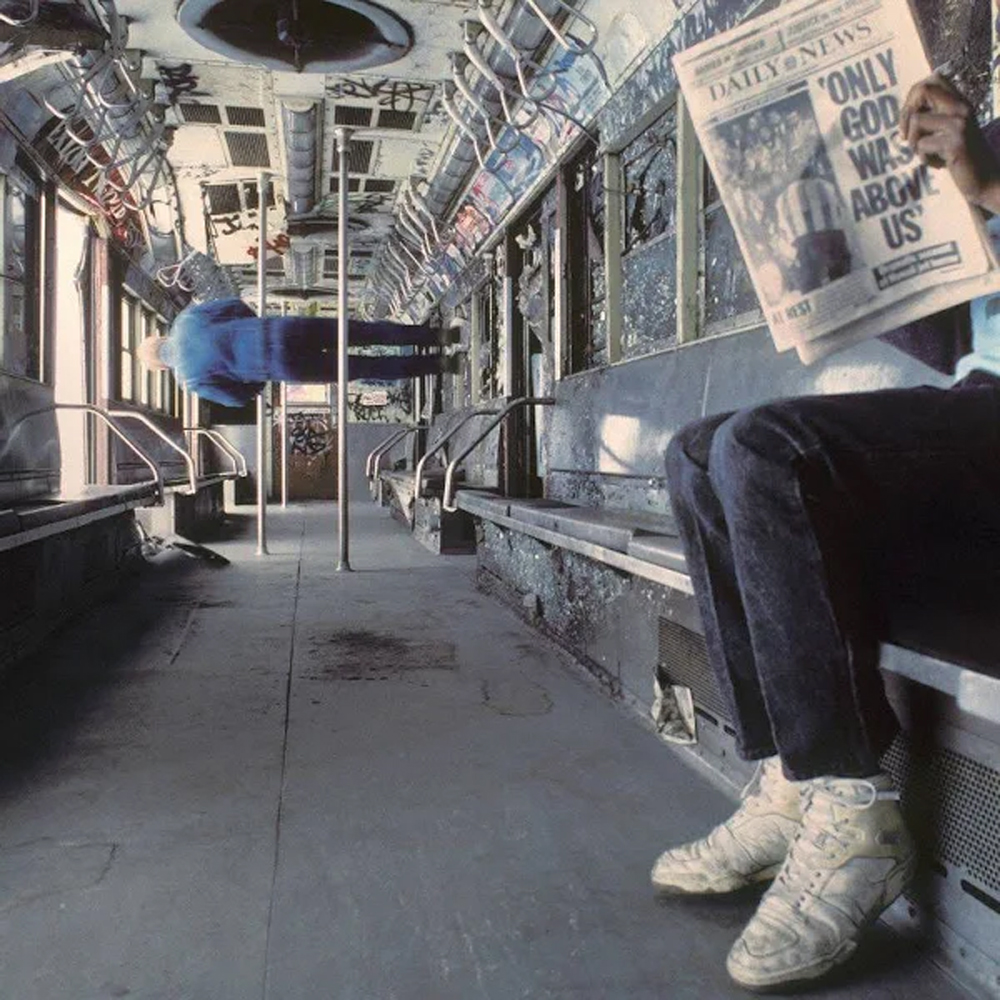 We definitely didn’t have Vampire Weekend’s most recent album being their second-best album on our bingo cards. Yet here we are. It definitely feels like they learned some lessons with the last album. This album feels sad and fun in the ways that their debut and MVIC were. The band also feels in on it. They know what they are. They aren’t trying to reinvent the wheel. They just want the wheel to fucking go. That said, new albums can be a trap. Perspective changes over time, so we could easily see ourselves looking back in a few years and not loving it. But at the moment, this album is killing it. While after a listen, “Father of the Bride” had that feeling of “huh… maybe it’ll grow on me,” “Only God was Above Us” ends with us genuinely wishing it wasn’t over. Vampire Weekend is back, bro! Grab your boat shoes,Vampire Weekend is back!
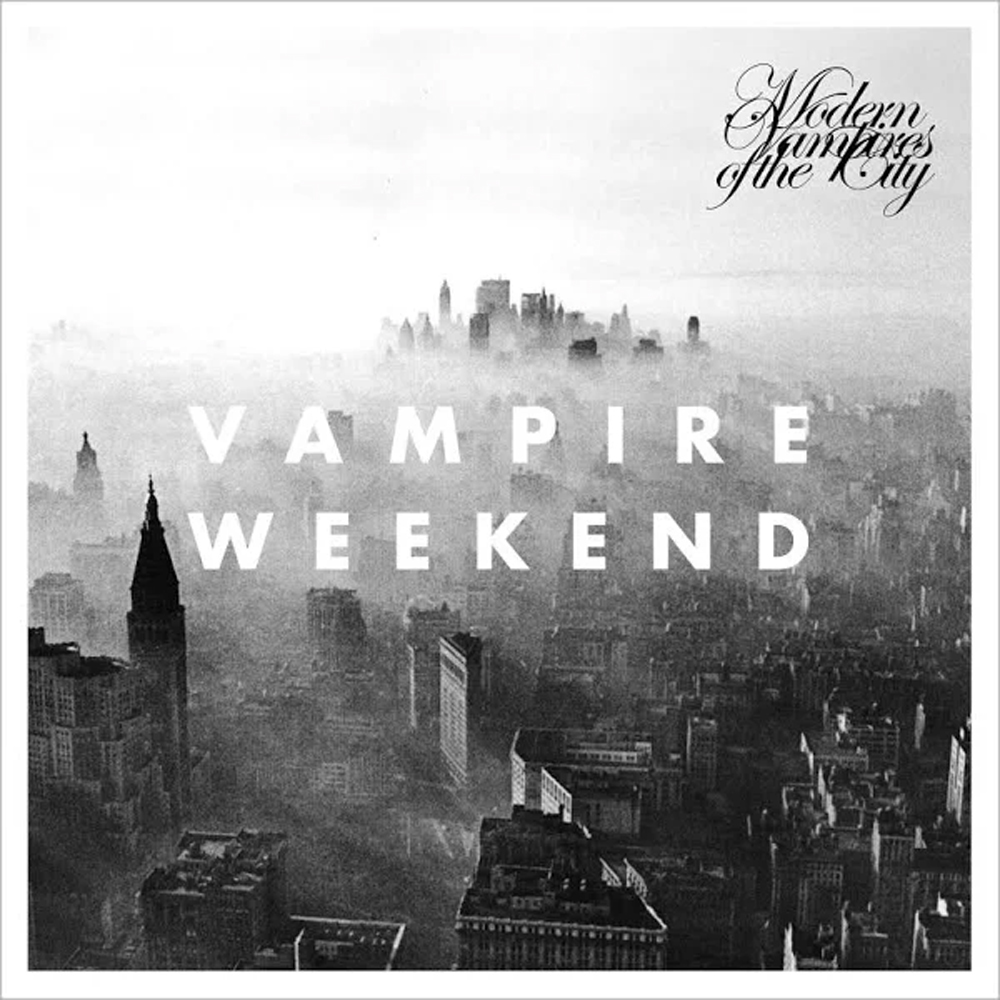 This album is the soundtrack to a specific party in a specific area of NYC at a specific time in history. And let’s be honest: you weren’t at that party. To be clear, neither were we. But we all wanted to be. We can pretend we don’t care. We can act like we weren’t looking at the pictures everyone at the party was posting on Facebook, but we were. We all were. Oh, Brad and Sarah were there? Huh. How come they knew about the party but we didn’t? Whatever, doesn’t matter. We don’t even wanna go out. Which is great. Because instead of being at that party, we were at home. Laundry piled up. Fridge smelling like death. “Boondocks Saints” poster on the wall. Or maybe by now it was a Tarantino film, maybe a protest poster. Either way, whatever emotion it evoked in us when we put it up there hasn’t been felt in this aging skin suit for at least a year. Binge-watching “West Wing,” or “Sex and the City,” or “The Wire.” Eating a whole bag of Tostitos with a hint of lime in our pajamas. We call them our pajamas, but they’re gym shorts that we bought on that one day we thought we might start exercising. And as we click on the video someone posted of everyone having an awesome time at the party we weren’t told about, we see the sweaty mess of absurdly attractive humans dancing, smiling, and singing “If Diane Young won’t change your mind, baby, baby, baby, baby, right on time.” And we smile. We know that song. So we put on “Modern Vampires in the City” and quietly sob to ourselves. That’s why we love this album. It’s a looking glass into the world we were never part of. And we never will be, bro. We never will be.

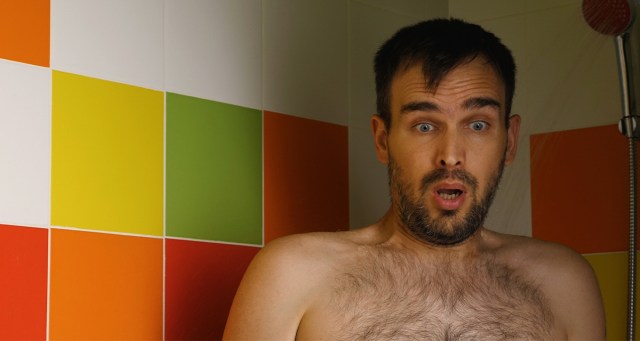
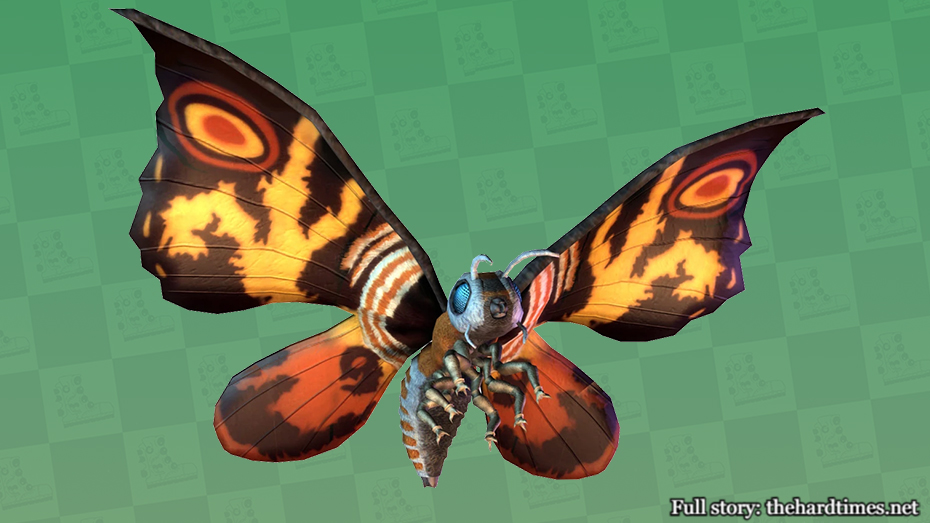 This thing is definitely not a moth. Moths are just bothersome little fuckers who like porch lights. This thing looks like it came straight outta the depths of hell for the sole purpose of ripping off my genitals and laughing as they wash down the drain.
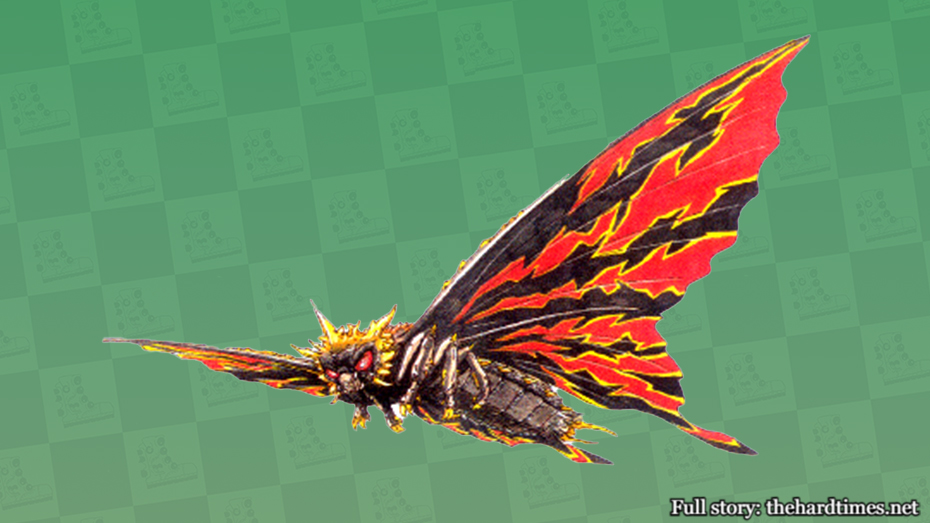 Battra is basically just a scalier version of Mothra. So still no resemblance to this horror I’m currently shielding my vulnerable parts from, which as a reminder, has a prime directive of watching me bleed out due to severed genitals.
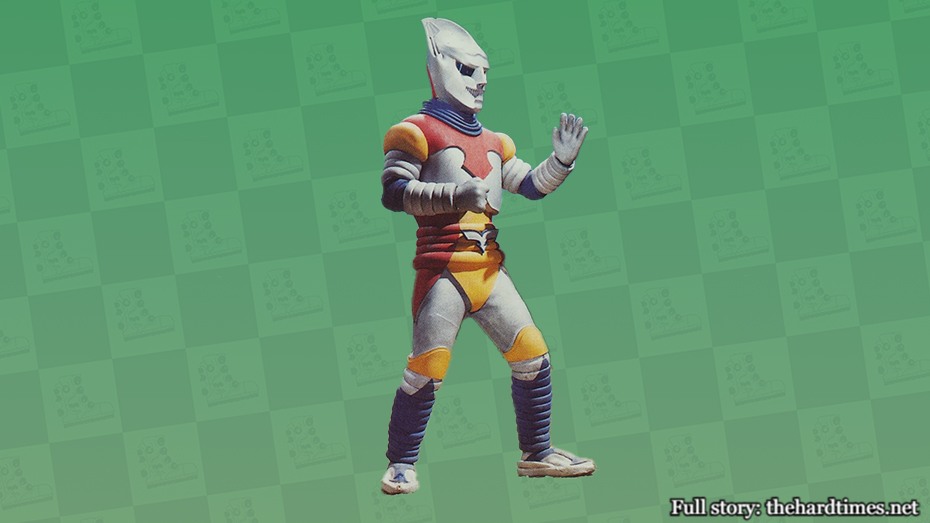 What the hell is this colorful ass robot thing anyway? It looks like it’s made out of Play-Doh. It’s not a monster, it’s not a bug. It’s useless to me. I’d welcome this thing in my tub.
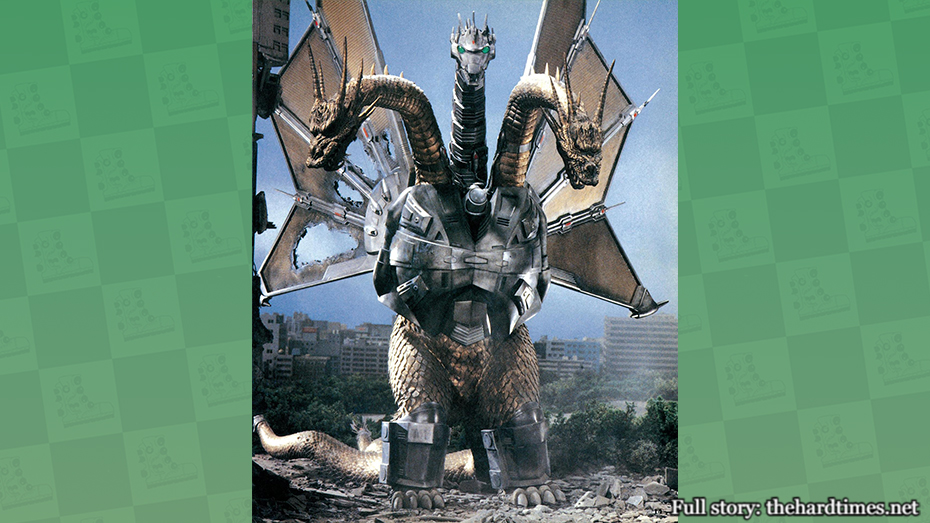 Though admittedly this weird bug certainly does look like a mash-up of like four different things that shouldn’t be together, the Mecha-King-Ghidorah monstrosity just ain’t the right combination. Also, I’m pretty sure this bug is looking at my butt now, if it tried to crawl inside me I’m a dead man.
 Nope. Too simple. Rodan is just a fucked up pterodactyl, and this bug looks like it only lives off of radiation and hatred.
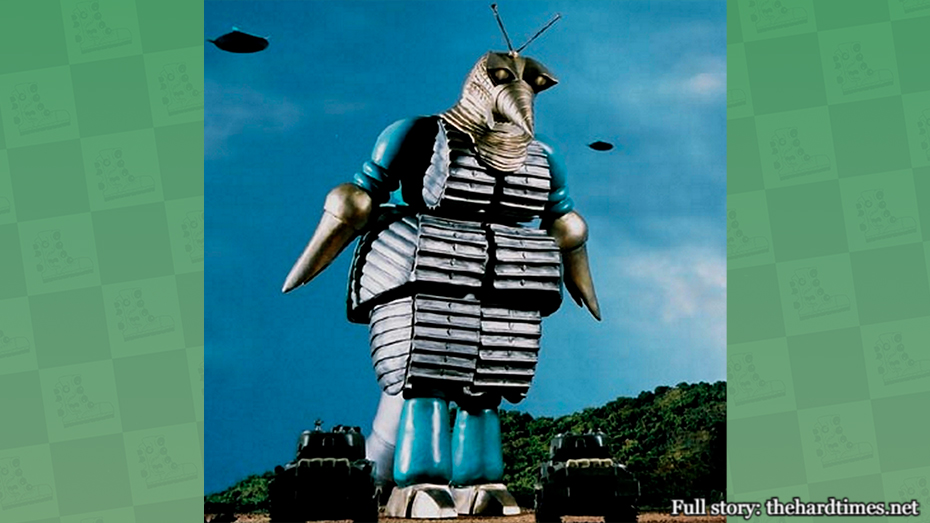 This one does actually have some of the features of the bug, albeit mechanically. But just out of principle I’m putting all the robot monsters pretty low on this list. Robots and bugs just don’t mix, plus everyone knows robots hate water.
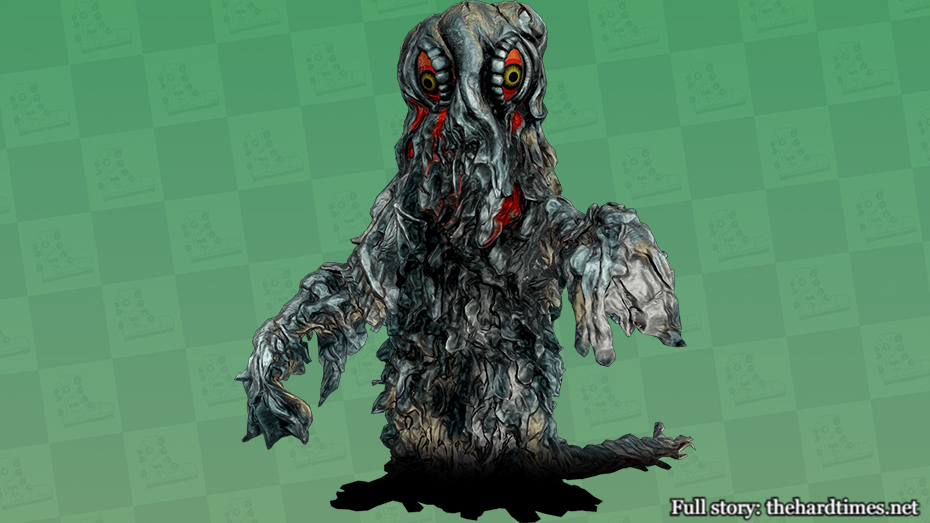 Though a toxic sludge kaiju is definitely the same energy that this bug is giving off, there are no physical similarities. At least I can give both of them credit for being incredibly ugly fucks. I wonder if I can drown this thing with my wife’s hair conditioner, but she might yell at me for “wasting” it again.
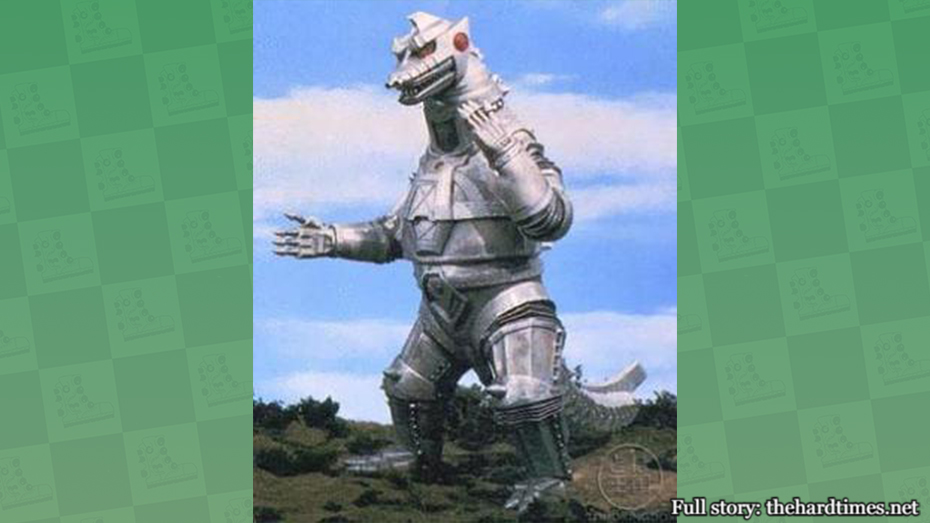 Alright, I think this is the last robot. Once again, robots aren’t bugs. Don’t try to confuse me, I need all of my focus on this abomination that I’m trapped in a confined, wet space with.
 I guess this one kind of looks like the bug. Not as close of a match as Godzilla classic, but not a total departure from that frightening-looking animal currently blocking the shower door. If I just don’t make any sudden moves maybe it will lose interest.
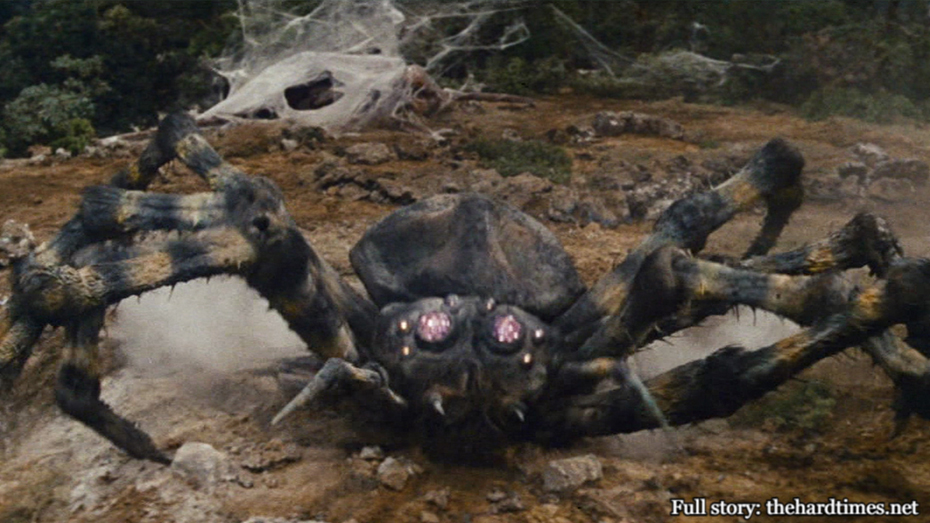 Oh how simple it would all be if this thing were just a giant spider. If it were Kumonga that decided to show up while I was soaping my armpits I might not have given it a second thought compared to whatever devil this thing really is.
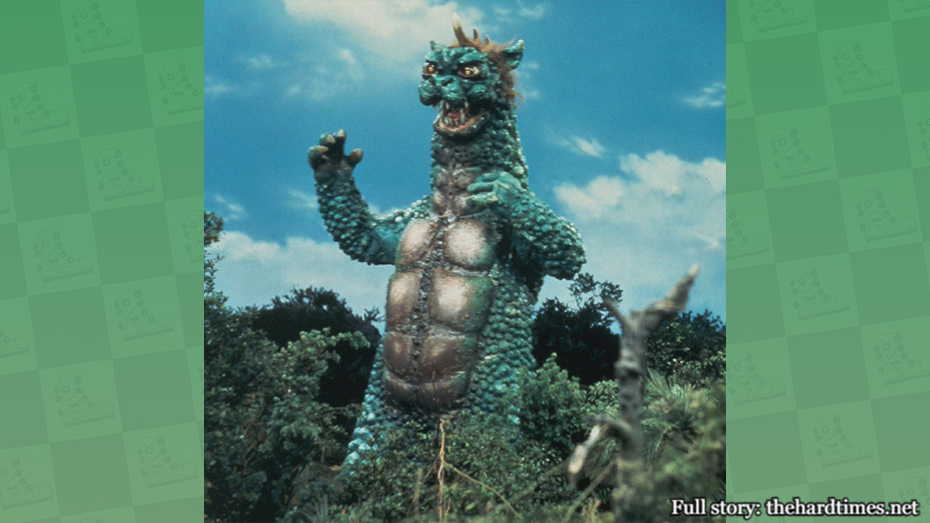 Now that we’re getting into the “middle of the road” monsters on this list a lot of these are starting to blend together. Also, I just made eye contact with the bug and I think it stole a piece of my soul. From now on I plan on drafting a will before each shower.
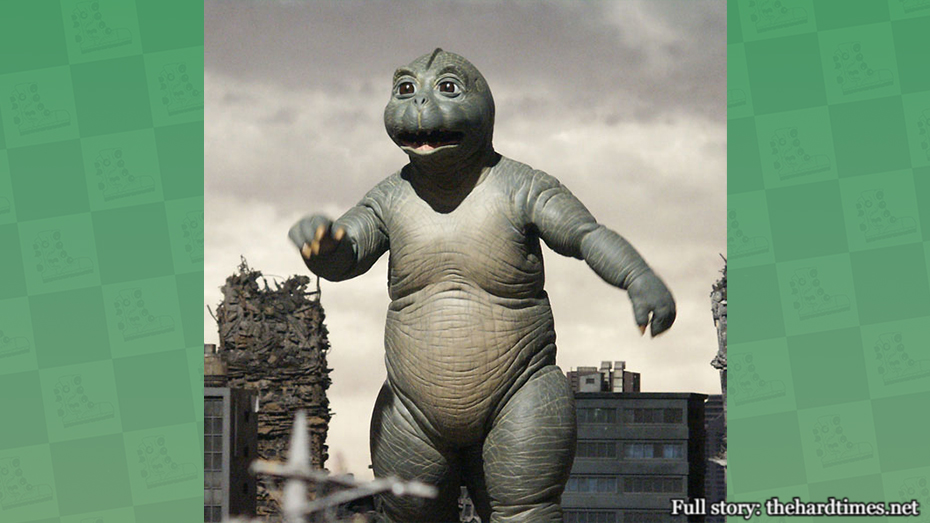 Minilla is actually kind of cute in a malformed Cabbage Patch Kid sort of way. I wish I could have placed him lower on this list but there were just too many damn robots that had to take up those slots.
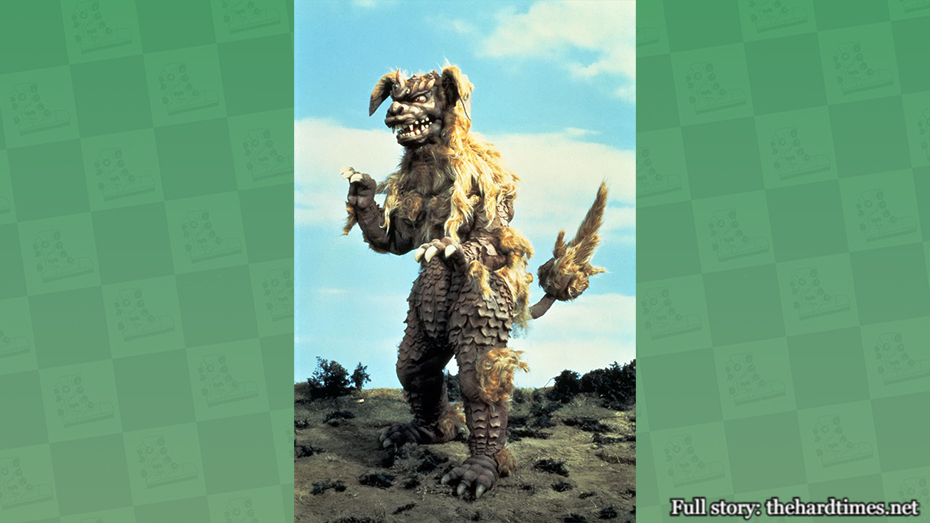 There aren’t enough insectoid qualities to really make a strong case that King Caesar looks like the bug. But the unrestrained violence in this monster’s eyes still earns him enough of a comparison for this spot.
 Godzilla classic is a pretty baseline comparison for whatever this horrible horrible thing is. I wonder if I can use a loofah as a weapon, or if my wife will be mad if I ruined her loofah fighting a kaiju.
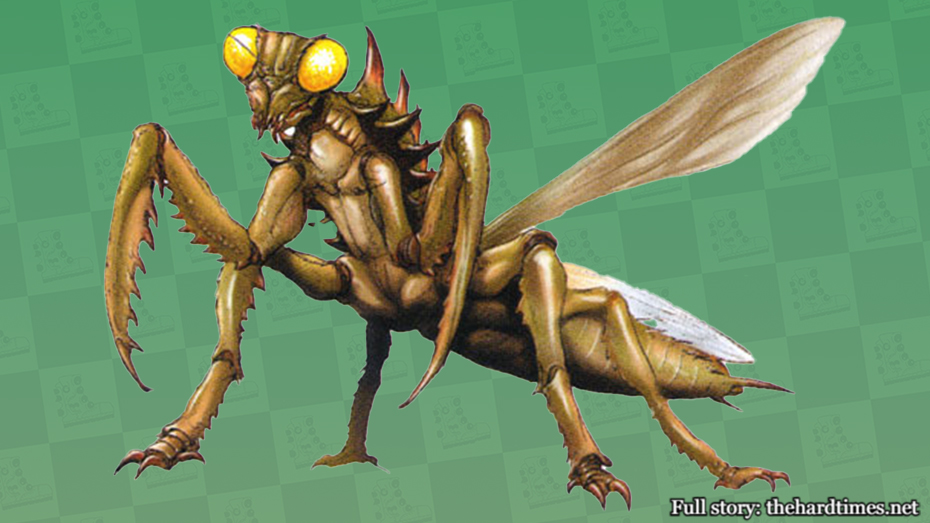 Closer. Kamacuras definitely nails down the insect part of the equation. But looking at this thing, probably a little too intently, I can’t help but think there’s something more than that to it. Pazuzu maybe?
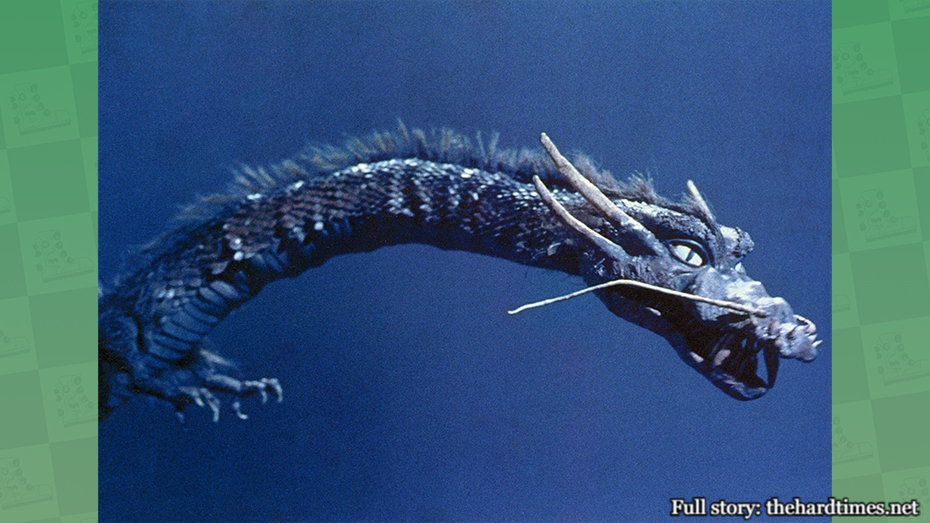 Oh God, it moved closer! The fucking bug moved closer to me! What do I do?! For the love of fuck what do I do?!
 Destoroyah is actually pretty close. Plus a monster born out of Godzilla’s violent past is a surefire relative for this demon. Also, I’m starting to run out of hot water and I’ve thrown every shampoo bottle I can find at the thing.
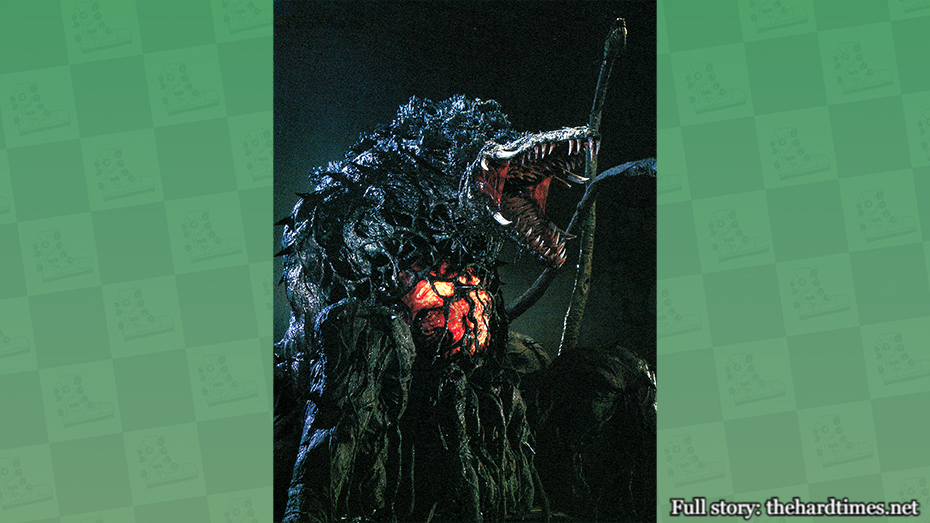 Well this is really starting to get really scary for me here. This monster is truly a hybrid of all things horrifying. Biolante may not be a spot on doppelganger, but if it comes at me with those acid claws I might poop in here a little bit.
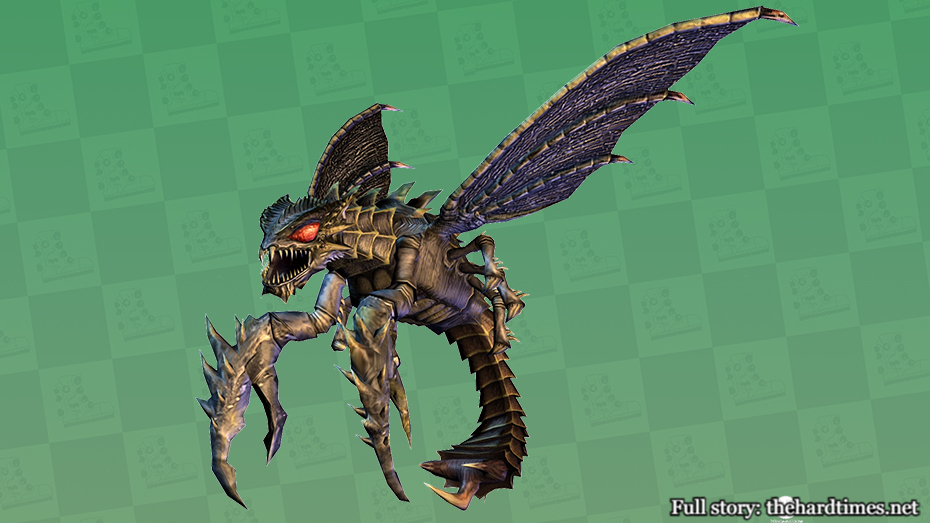 The old Godzilla movies really reused a lot of the same monster models. Similarly, I’m currently reusing this dull safety razor as a makeshift shiv in case this weird bug decides to try anything funny. I can tell it’s thinking about it.
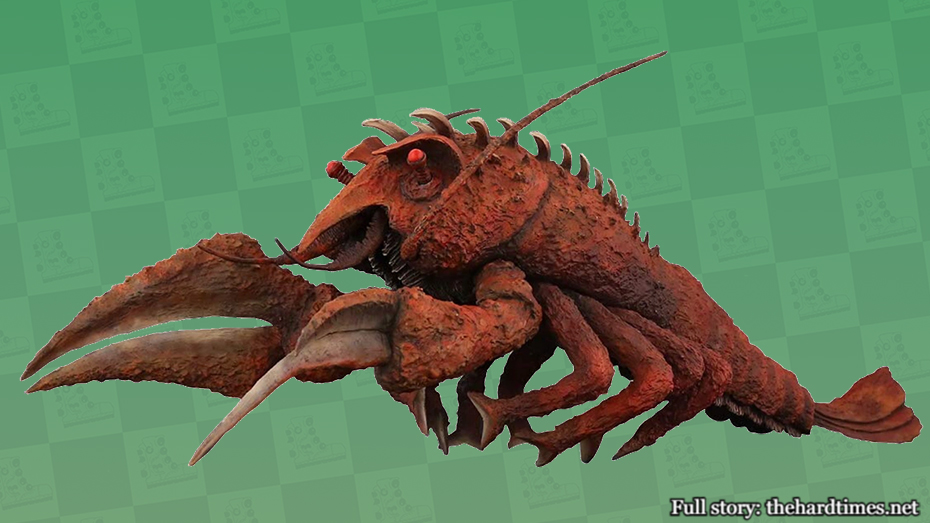 I mean, what are lobsters besides sea bugs anyway? And Ebirah is basically just a big lobster who was mutated by radioactive wastewater. So yeah, there’s a fair comparison here.
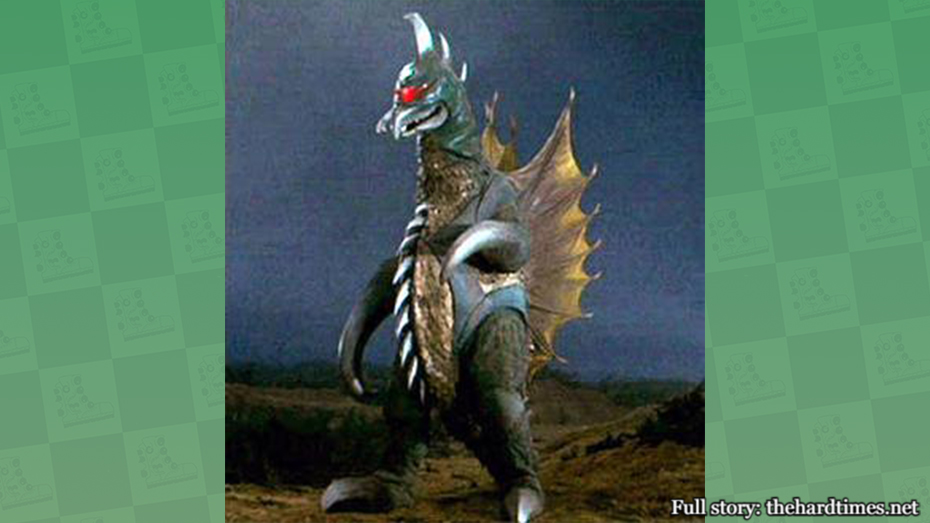 Gigan is pretty close in form, but nowhere near as ferocious in appearance. Still, if I imagine the bug as more Gigan-like it makes it a little easier for me to try to sprint past it and the hell out of this entire house. I may actually have to just straight up move.
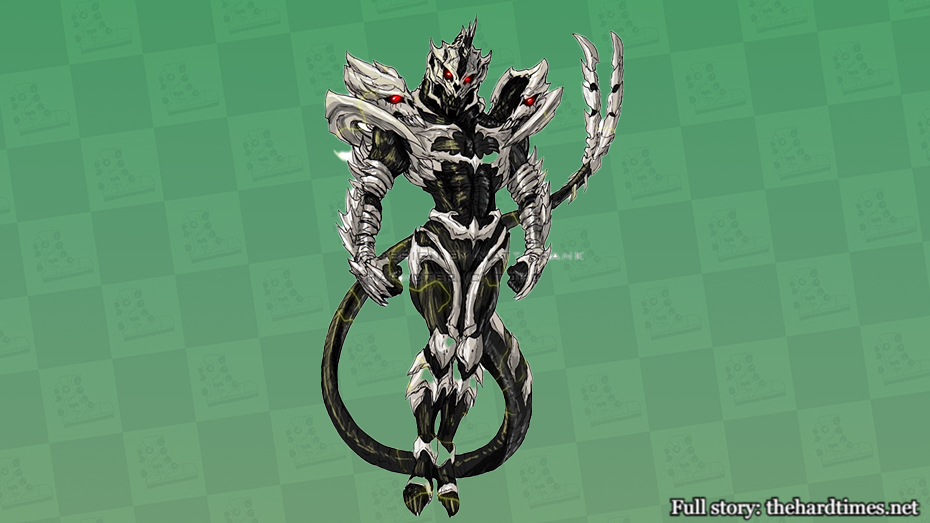 Okay, now that I see this thing and Monster X side by side I totally believe this is actually an alien. I would explain how it got in here without me realizing it. It just beamed in like some kind of xenomorph jerkwad to trap me in a case of my own juices.
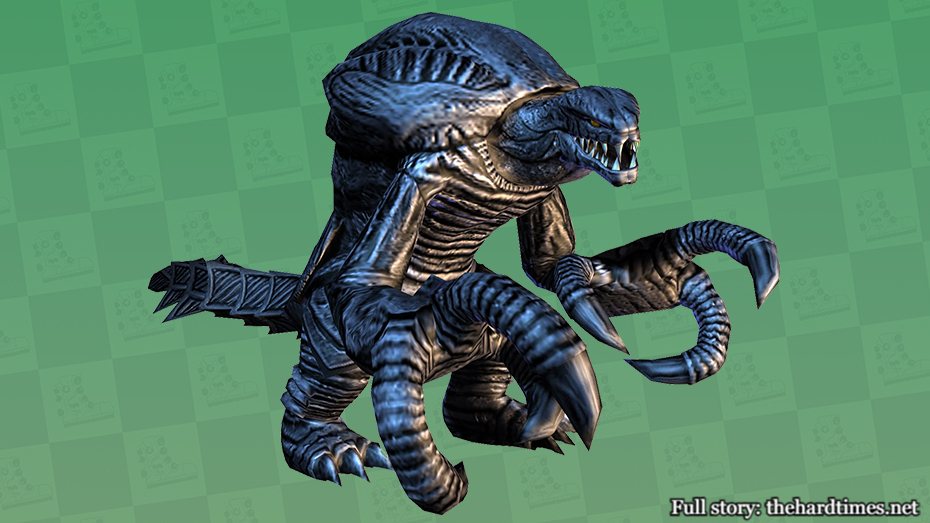 Man, we are really getting close here. As much as I don’t like the idea of Orga watching me apply my prescription scalp oil, I guess there is some solace in at least knowing what it might be that finally decides to devour me.
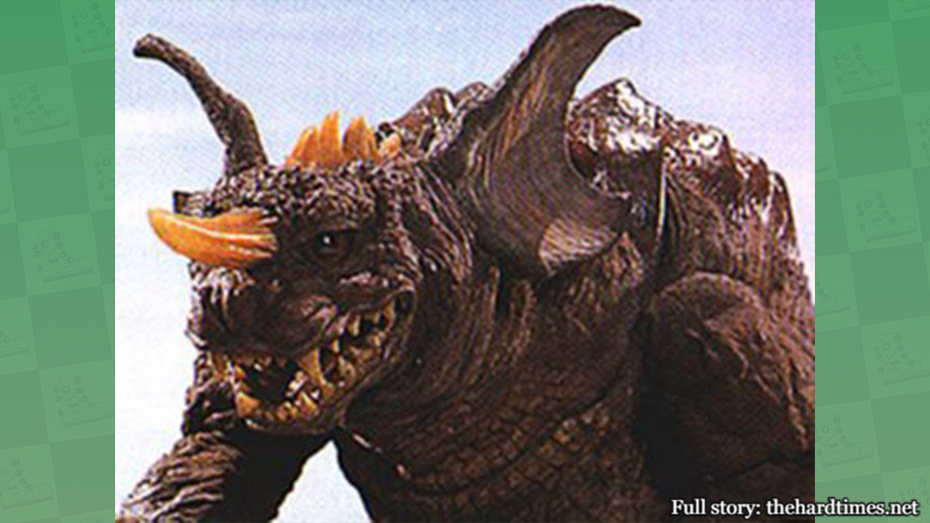 It moved again! Oh fuck, it’s going in for the kill!
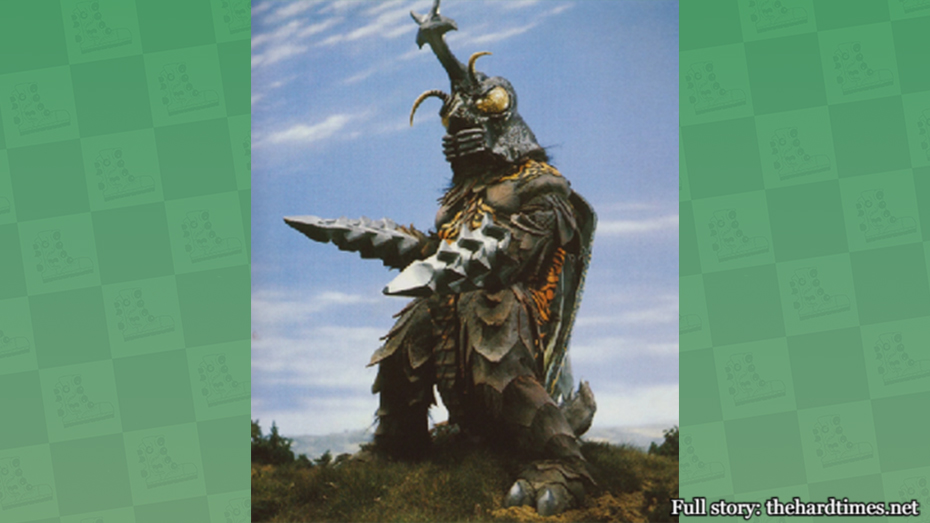 Yep, that’s it. The drill hands, the death wings, that fucking hammer sticking out of its forehead. How the hell did a Megalon get into my shower? At least now I know what I’m up against and maybe can get out of here. How did Godzilla beat Megalon in the movie? I hope it involves squirting Tresemme Volumizer at it and running like hell because that’s kinda my only option at this point.

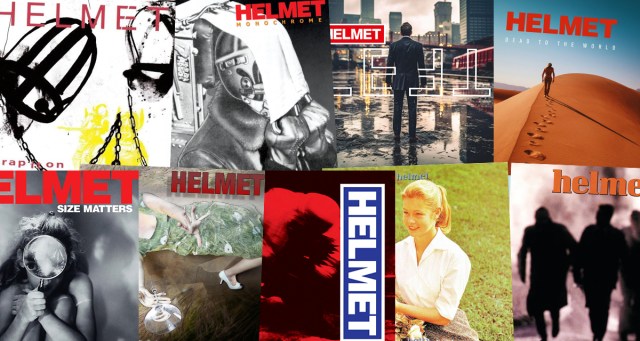
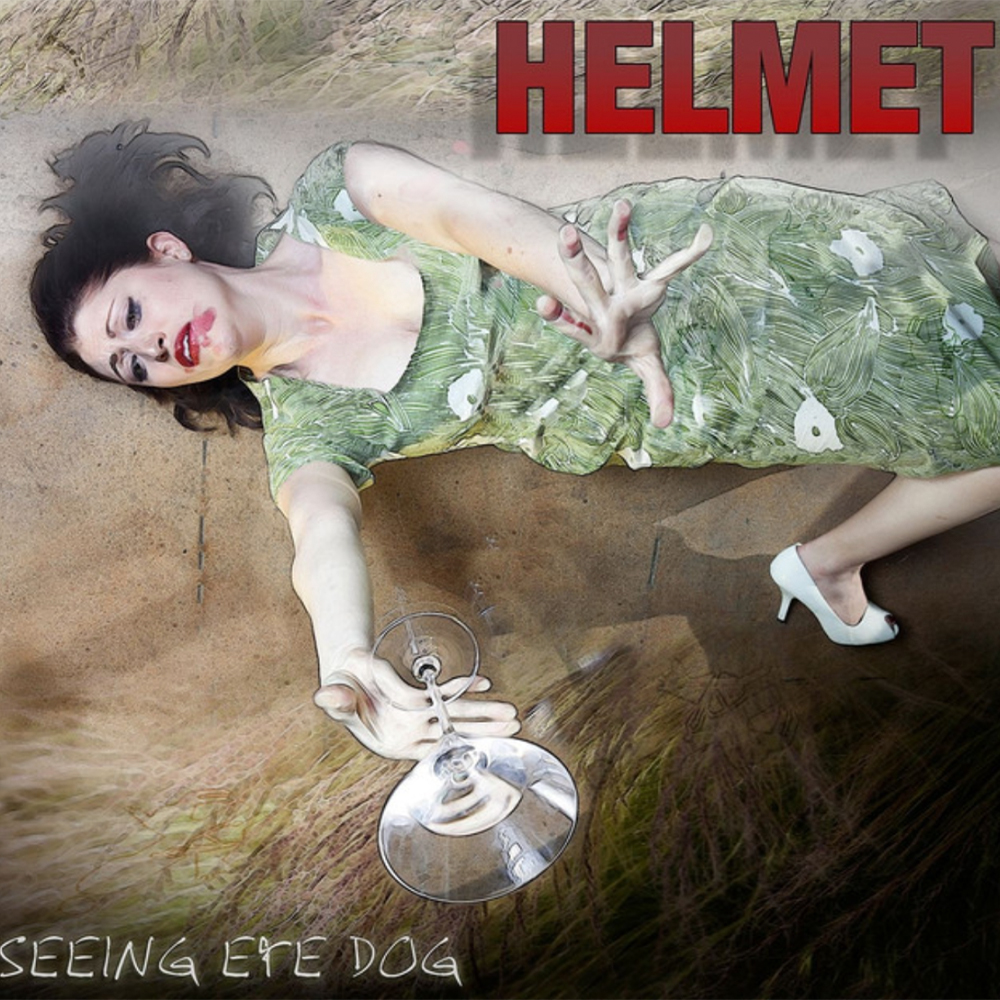 The cover of Helmet’s seventh album looks like it was done by AI despite coming out fourteen years before ChatGPT was invented. Maybe worst of all the band’s logo has a horrendous default drop shadow on it. None of this has anything to do with what the album sounds like of course but it is a pretty good indicator that this is not Hamilton & Co. at their finest. That’s not to say it’s terrible since there are some classic Helmet riffs on “Welcome To Algiers” and a few new songs that go in a new direction that work like the breezy “LA Water.” But we need to start somewhere on the low end and this is the lowest of the low for them.
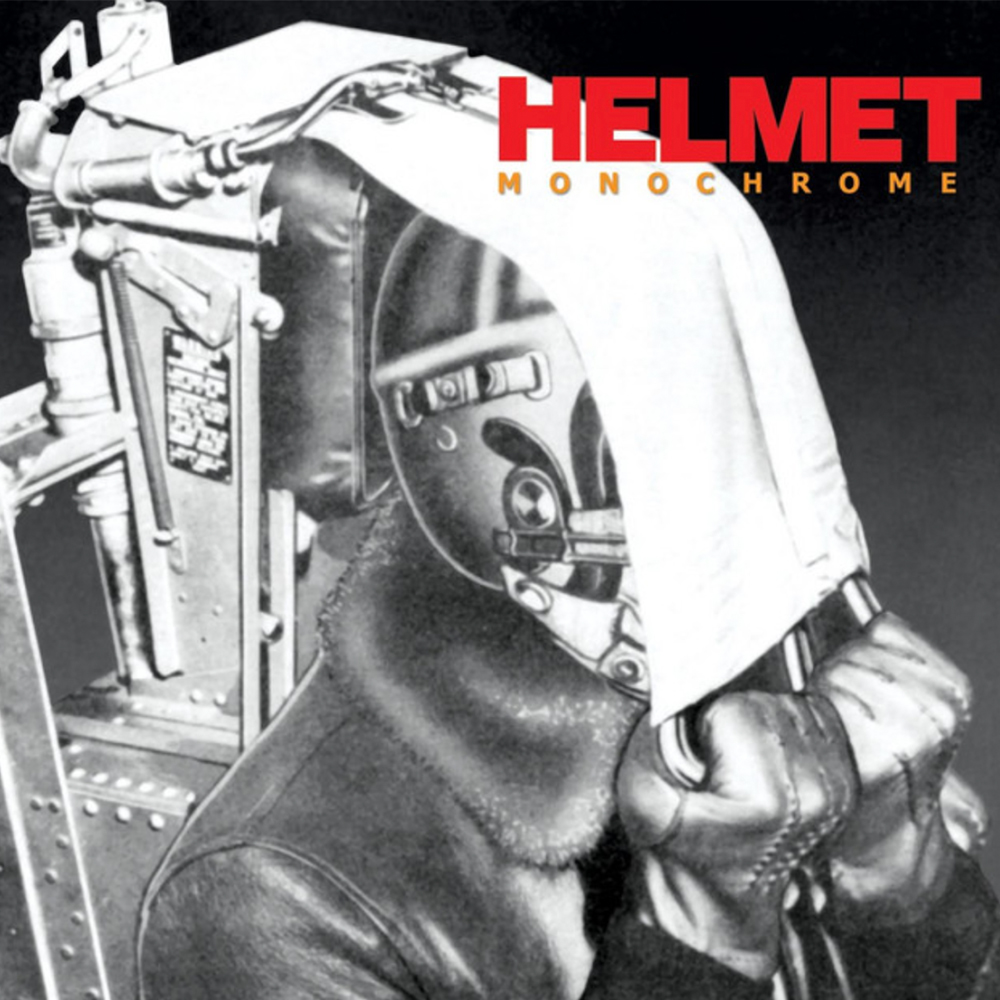 Right off the bat, “Monochrome” sounds like an attempt to return to their “Meantime” sound. Even the cover looks like a halfhearted effort at reliving their peak. You can’t fault them for trying but it is sort of the musical equivalent of getting back together with an ex years later. It seems like the good old days but you’re older now and just don’t have the energy to put up with them anymore and all your friends are a little embarrassed for you.
 Playing the same heavy(ish) style of music for 30+ years based on essentially 3 or 4 frets of the guitar neck means that you’re probably going to run out of ideas eventually and honestly sounds like a living hell. Returning after a seven-year hiatus, Helmet released “Left” and somehow managed to break the formula they’ve used since the George Bush Sr. administration all while still actually sounding like a Helmet record. Is it their best? No. Is it their worst? No. Is it likely to be in anyone’s heavy rotation? No. Am I asking myself questions to answer to pad out this review since there really isn’t much to say about this album? Possibly.
 Some songs on “Dead to the World” are a bit of a chicken and egg situation. Helmet’s influence on bands like Cave In come full circle with songs like “Life or Death” that sound like they were directly influenced by Cave In. Like, you could tell me I’m listening to later-era Cave In and I’d believe you. Unlike the previous couple of mid-career albums though, Hamilton seems to remember that his vocals sometimes need a little studio love and aren’t really the strongest part of their music. The vocals are also a little lower in the mix (as they should be). You aren’t Taylor Swift, my dude.
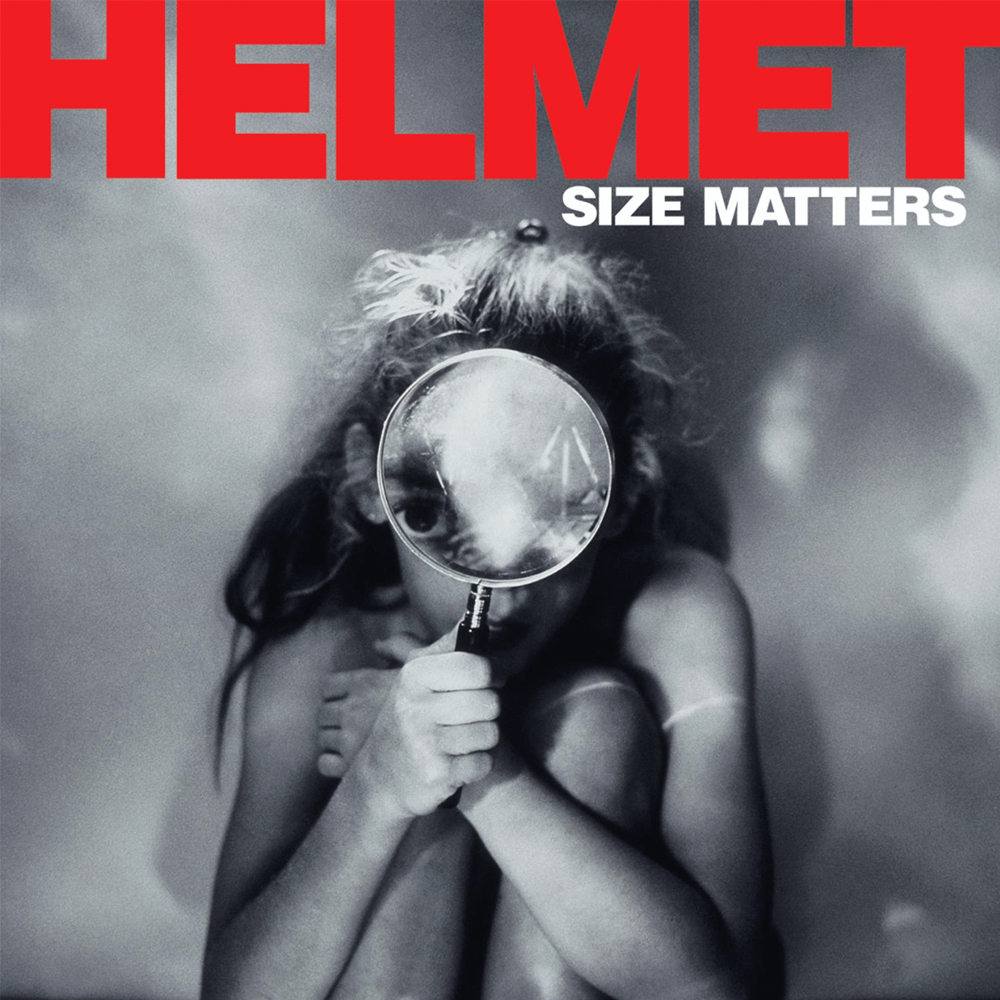 By 2004 all of the nu-metal bands that had been directly influenced by Helmet were (thankfully) starting to lose favor with the masses and the rise of mall emo had begun (un-thankfully). “Size Matters” comes across as Helmet’s best attempt at being a mainstream metal act. There are a lot of radio-friendly hooks and repeating choruses and the production is glossy and polished. Unfortunately, their big TRL moment never happened but 20 years later “Size Matters” is a perfectly fine time capsule to listen to while you throw on your old bootcut jeans and update your Myspace page. Did you know Myspace was still around by the way? I had no idea.
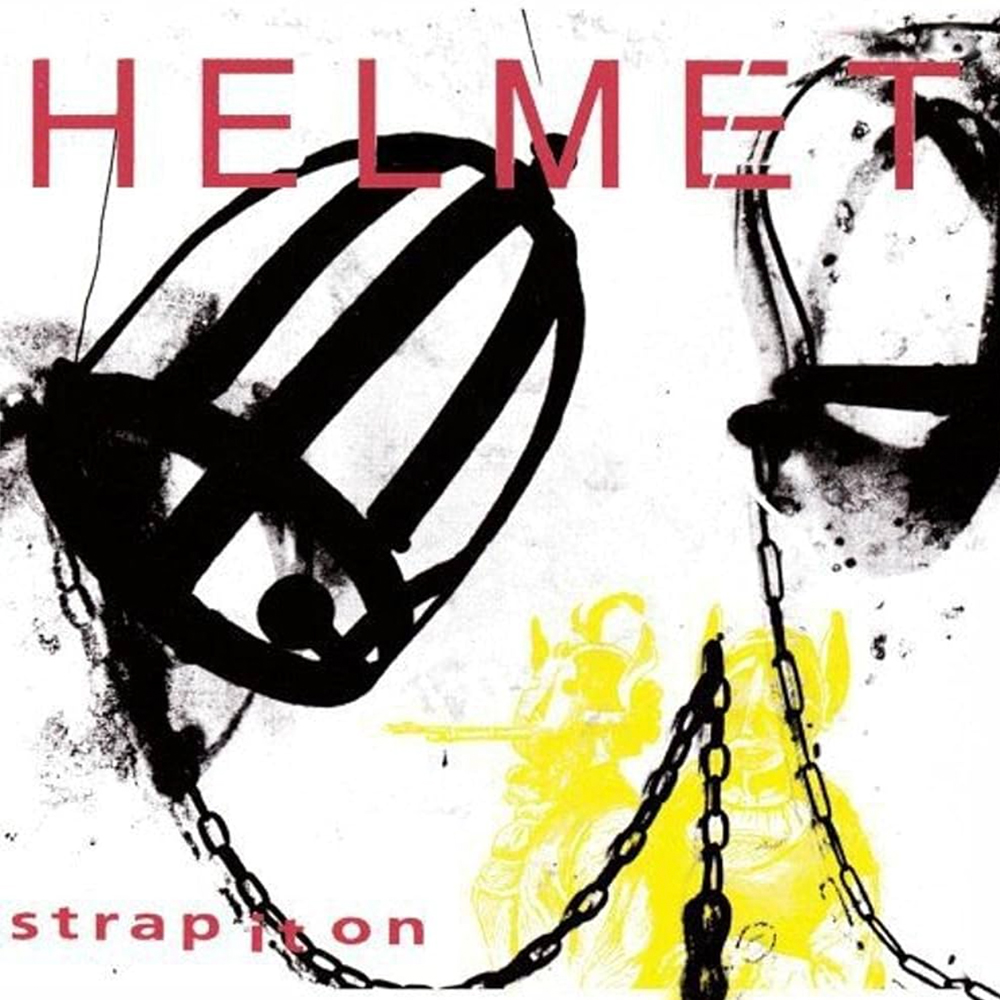 New York City in the late 1980s was not the sanitized, curated influencer selfie backdrop it is today. There were still areas you did not venture into at night or day. The bands of this time period reflected the harsh, you-could-die-at-any-moment reality of crumbling Gotham. It must have been tough for Helmet to find their place with the exploding New York hardcore scene of the late ‘80s since they weren’t hardcore and also weren’t really metal. Probably their harshest-sounding album both in instrumentation and production. It’s raw and aggressive and almost has a faint smell of a hot, urine-soaked 1990’s Lower East Side sidewalk.
 After burning through a rotating door of second guitarists on the first few albums, Helmet released “Aftertaste” as a three-piece. The cover is the three members in silhouette disappearing into fog which is fitting since this is the last time this iteration of the now three original members would ever be seen. 1997 was a weird year for music as grunge had run its course and the awful backwards baseball hat-wearing burning sun of hot garbage called nu-metal was appearing above the horizon. Stuck in this in-between period was Helmet trying out some radio-friendly jams that in hindsight are some of their best songwriting.
 The first of two appearances by Helmet on fantastic movie soundtracks for totally unwatchable movies (They were also included on the soundtrack to the ill-fated disaster “The Crow.”) There’s a lot to unpack with this soundtrack and its ambitious genre-melding collaborations but the clear standout is Helmet’s collusion with the Celtic Jersey adorned House of Pain on the song “Just Another Victim.” The classic era syncopated riffs, Paige Hamilton’s angsty vocals, lyrics about Jodie Foster and Harvey Keitel – this song’s got it all!
 Somehow this album is now 30 years old and is still just as listenable as it was in 1994. If you were to listen to something in 1994 that was 30 years old it would be something like The Beatles and who the fuck would ever want to do that. “Betty” is slightly less aggressive and more accessible than their previous albums but still has all the machine-like hum and precision you expect from Helmet. Hamilton really shows off his musical chops by adding some jazzy elements here and there and doing what is probably his best clean singing than on any other release.
 The cover of “Meantime” is a stark monochromatic image of what looks like a worker shoveling coal into machinery and that’s exactly what the album sounds like – a monolithic, well-oiled machine. The best lineup of the band delivering crushing riffs with John Stanier on drums absolutely destroying those things. Meantime essentially created a new genre of metal while simultaneously ending it since no other band including Helmet themselves could reproduce. “Meantime” helped Helmet achieve the most coveted prize a non-mainstream metal band could achieve in the ‘90s – being featured on an episode of ‘Beavis and Butthead’ with Butthead making the observation: “These look like normal guys, if they were walking down the street you wouldn’t even know they were cool.”